Showing posts with label lists. Show all posts

Monday, September 28, 2020

Oldest Ringless Players: 2020 Edition

You know how this works: Oldest player on the 40-man roster without a World Series ring. Let's see who this year's lucky candidates to get their first one are.

Atlanta Braves: Darren O'Day (October 22, 1982)
Chicago Cubs: Yu Darvish (August 16, 1986)
Chicago White Sox: Edwin Encarnacion (January 7, 1983)
Cincinnati Reds: Joey Votto (September 10, 1983)
Cleveland Indians: Oliver Perez (August 15, 1981)
Houston Astros: Zack Greinke (October 21, 1983)
Los Angeles Dodgers: Justin Turner (November 23, 1984)
Miami Marlins: Brandon Kintzler (August 1, 1984)
Milwaukee Brewers: Ryan Braun (November 17, 1983)
Minnesota Twins: Rich Hill (March 11, 1980)
New York Yankees: Adam Ottavino (November 22, 1985)
Oakland Athletics: Joakim Soria (May 18, 1984)
San Diego Padres: Craig Stammen (March 9, 1984)
St. Louis Cardinals: Matt Wieters (May 21, 1986)
Tampa Bay Rays: Chaz Roe (October 9, 1986)
Toronto Blue Jays: Matt Shoemaker (September 27, 1986)

Sixteen guys. That's way too many to have to do. In a matter of a few days, this number will be cut in half. So let's go. Let's complete this whirlwind of a postseason.

Friday, November 15, 2019

A Few Updates

Not a big post here. Just letting you know I've updated the following pages in light of this year's award winners being announced:

Rookie of the Year Facts
The Second Place Award Winners

Tuesday, October 22, 2019

A List Updated After Nine Years: First World Series Homer in Franchise History

Some of you longtime readers may remember a list I made when the Rangers were in their first World Series back in 2010. Mitch Moreland was the first Ranger to homer in World Series play, and I thought it'd be fun to look back on who held the distinction for other franchises.

Now that the Nationals have played their first World Series game, it's time to update it. Instead of editing that old post with my outdated Google Sheet embed method, I'll put a table here:


FranchiseBatterPitcherDate
PiratesJimmy SebringCy Young10/1/1903
Red SoxPatsy DoughertySam Leever10/2/1903
CubsJoe TinkerBill Donovan10/11/1908
TigersDavy JonesBabe Adams10/13/1909
AthleticsDanny MurphyHarry McIntire10/20/1910
GiantsLarry DoyleCharley Hall10/15/1912
BravesHank GowdyJoe Bush10/12/1914
PhilliesFred LuderusRube Foster10/13/1915
DodgersHi MyersBabe Ruth10/9/1916
White SoxHappy FelschSlim Sallee10/6/1917
IndiansElmer SmithBurleigh Grimes10/10/1920
YankeesBabe RuthPhil Douglas10/9/1921
TwinsGoose GoslinJack Bentley10/5/1924
CardinalsBilly SouthworthUrban Shocker10/3/1926
RedsJimmy RippleSchoolboy Rowe10/3/1940
OriolesGeorge McQuinnMort Cooper10/4/1944
MetsDonn ClendenonDave McNally10/12/1969
RoyalsAmos OtisBob Walk10/14/1980
BrewersTed SimmonsBob Forsch10/12/1982
PadresKurt BevacquaDan Petry10/10/1984
Blue JaysJoe CarterTom Glavine10/17/1992
MarlinsMoises AlouOrel Hershiser10/18/1997
DiamondbacksCraig CounsellMike Mussina10/27/2001
AngelsTroy GlausJason Schmidt10/19/2002
AstrosMike LambJose Contreras10/22/2005
RockiesMatt HollidayHideki Okajima10/27/2007
RaysCarl CrawfordCole Hamels10/22/2008
RangersMitch MorelandJonathan Sanchez10/30/2010
NationalsRyan ZimmermanGerrit Cole10/22/2019
Mariners?????????

If you go back and read that original post, you can see I classified each of these guys based on how fitting they were for the distinction, and I think Ryan Zimmerman definitely falls into the "Franchise Stars" category. Congrats, Mr. National, and let's go Nats!

Tuesday, October 1, 2019

Oldest Ringless Players and Playoff Predicitons: 2019 Edition

Yes, folks, I'm still alive. I decided to take a break from compulsively updating this blog because it was getting to be too much of a distraction. But I'm back for playoff time, the part we all look forward to each season.

To start out, here's the annual Oldest Ringless Players list:

Atlanta Braves: Darren O'Day (b. October 22, 1982)
Houston Astros: Zack Greinke (b. October 21, 1983)
Los Angeles Dodgers: Rich Hill (b. March 11, 1980)
Milwaukee Brewers: Matt Albers (b. January 20, 1983)
Minnesota Twins: Nelson Cruz (b. July 1, 1980)
New York Yankees: Edwin Encarnacion (b. January 7, 1983)
Oakland Athletics: Joakim Soria (b. May 18, 1984)
St. Louis Cardinals: Matt Wieters (b. May 21, 1986)
Tampa Bay Rays:
Eric Sogard (b. May 22, 1986)
Washington Nationals: Fernando Rodney (b. March 18, 1977)

I can still remember when it was rare for any players on this list to have been born in the 1980s. I've been doing this for a long time. Wouldn't it be great if Fernando Rodney, who seems to frequently show up on this blog around this time of year, finally got that ring? Hey, it could happen. The NHL's St. Louis Blues and the NBA's Toronto Raptors both won their first championships this season, so maybe 2019 is the year of franchises' first titles. The Nats would be perfect for that in baseball, and it'd be funny if it happened right after Bryce Harper left town. I can dream.

My preseason predictions actually weren't terribly far off, though obviously I didn't get everything right. For my predictions now that we have the real thing, here we go:

Stupid Wild Card Games That Nobody Wanted

Washington over Milwaukee
Tampa Bay over Oakland

Trying to predict a one-game playoff is a fool's errand, since it's basically a coin flip, but what the heck.

I think Washington is a better team than Milwaukee in terms of actual talent, and they don't have the injury problems the Brewers are facing. Throw in the fact that they're at home and Milwaukee's probably out of gas after going on a late-season tear to clinch a postseason spot, and I give the Nats the edge here. Personally, I'm rooting for them as well.

I pick Tampa Bay to beat Oakland because that's what my gut says. I'm rooting for Oakland, but I get a feeling that Charlie Morton's going to pitch a gem to put the Rays in the real playoffs.

 
National League Division Series

St. Louis over Atlanta
Los Angeles over Washington

I pick the Cardinals to beat the Braves because they're the Cardinals. Old school readers know how much I hate them and believe them to be evil. Mentally, I always give them the upper hand until they lose. The Dodgers have been too much of a powerhouse this year for me to think they'll be upset in the first round. You gotta go with them here.


American League Division Series

Houston over Tampa Bay
New York over Minnesota

While New York's starting rotation is a question mark and I'd love to see the Twins beat them, I just can't bring myself to pick against the Evil Empire in this matchup. The Twins seem jinxed against the Yankees in the playoffs, and until they beat them, I'm going to be pessimistic about their chances. I pick Houston over Tampa Bay because the Astros are simply the best team in baseball this year.

 
National League Championship Series

Los Angeles over St. Louis

The Cardinals might be evil, but the Dodgers are so good that I think it would be a huge upset for the Cardinals to beat them. Nothing's impossible in a short series, of course, but I'm still not convinced that the Cardinals haven't played above their heads this year. I pick L.A. to win its third straight pennant.

 
American League Championship Series

New York over Houston

Yes, Houston is the better team and they'll have home field advantage, but as I said at the beginning of the season, do you really think we're going to get out of this decade without seeing the Yankees win a pennant? Just when you think they're down, they come back to break your heart. That's the kind of franchise they are. Besides that, they're out for revenge after the Astros beat them in 2017, so this would seem the time to exact it.

 
World Series

New York over Los Angeles

Oh wow, look at this classic matchup. Why, it harkens back to the good old days of the 1950s when no one outside of New York ever won anything in October. It's also reminiscent of the battles between Lasorda's men and the Bronx Zoo pinstripers from the '70s and '80s. It doesn't get any better for baseball than this big-market matchup, does it? So who wins? Eh, let's go with the Yankees, because what could be more fitting? It would be terribly wrong if CC Sabathia couldn't close out his career with one more World Series ring and Brett Gardner retired hitless in World Series play. It's gotta happen. It's just gotta.


Sunday, May 26, 2019

The Old Home Boys

As a follow-up to this post, I thought it'd be fun to look at who played the most games for each of today's current franchises when they played under different polity names. In this case, there are two that were so short-lived they had none. Let's see who they were:

FranchisePlayerGames
Philadelphia AthleticsJimmy Dykes1702
California AngelsBrian Downing1661
Boston BravesJohn Morrill1219
St. Louis BrownsJack Tobin1133
New York GiantsFrankie Frisch1000
Florida MarlinsCharles Johnson587
Brooklyn DodgersWillie Keeler566
Washington Senators (I)Charles Moran160
Baltimore Orioles (I)Bill Keister115
Kansas City AthleticsJohn O'Donoghue80
Milwaukee BravesBob Uecker46
Washington Senators (II)Johnny Klippstein42
Montreal ExposDenis Boucher15
Milwaukee Brewers (I)George McBride3
Anaheim Angelsnone0
Seattle Pilotsnone0

Would've been cool if the Pilots or Anaheim Angels could've participated, but no such luck.

It's amazing that the Milwaukee teams have had so few players born in the city. If you recall the other list, the Brewers' leader is Paul Wagner with 15. It looks like there's a good reason Bob Uecker has such a long-standing relationship with the Brewers: He's Milwaukee's all-time leading native son to play in the majors with a Milwaukee team. 46 whole games!


Monday, March 11, 2019

The Home Boys

Sometimes a player is simply a perfect fit for the team he plays for. Sometimes it's because he embodies the city's personality, sometimes his skill set fits the team's plan to a a T, and sometimes he was born in the very city where he now wears the uniform. As always, I started wondering. Of the current 30 MLB franchises, who is each one's all-time leader in games played having been born in the polity they represent?

Most of the rules should be straightforward. For a team that represents a city, such as the St. Louis Cardinals, we're looking for the player born in St. Louis who played the most games as a Cardinal. For a team that represents, a state, such the Minnesota Twins, the player only has to have been born in Minnesota, not necessarily the city the Twins play in.

For franchises that have changed polity names, we only count games played under the current polity name. The Los Angeles Angels, for example, were inaugurated under that name, before changing to the California Angels, then to the Anaheim Angels, then back to Los Angeles again. We're looking for an Angeleno player who played with the franchise during the years 1961-65 and 2005-present. Any games played for the Angels under the California or Anaheim names don't count.

For New York, I only went by New York City, since I don't believe either the Yankees or Mets franchise is supposed to represent the state as a whole. I counted the various boroughs, although the leaders for both franchises have their birthplaces listed as "New York, NY" in the records.

The only one that was tricky was the Rays, since Tampa Bay is a geographical feature, not a political entity. I decided to count anyone born in the Tampa Bay metro area, mainly the cities of Tampa, St. Petersburg, and Clearwater, plus whatever smaller towns in the area I could find.

So with that said, let's take a look at the list:


FranchisePlayerGames
Cincinnati RedsPete Rose2722
New York YankeesLou Gehrig2164
Chicago CubsPhil Cavarretta1953
Minnesota TwinsJoe Mauer1858
New York MetsEd Kranepool1853
Detroit TigersBill Freehan1774
Philadelphia PhilliesDel Ennis1630
Cleveland IndiansBill Bradley1231
Houston AstrosCraig Reynolds1170
Los Angeles DodgersWillie Crawford989
Chicago White SoxJohnny Mostil972
Pittsburgh PiratesFrank Thomas925
St. Louis CardinalsMike Shannon882
Texas RangersDavid Murphy826
San Diego PadresAdrian Gonzalez799
Atlanta BravesJeff Francoeur730
Seattle MarinersJohn Olerud702
Tampa Bay RaysMatthew Joyce633
Los Angeles AngelsGarret Anderson536
Oakland AthleticsDennis Eckersley525
San Francisco GiantsWillie McGee444
Boston Red SoxManny Delcarmen289
Kansas City RoyalsSteve Mingori264
Arizona DiamondbacksShea Hillenbrand233
Toronto Blue JaysRob Ducey188
Baltimore OriolesTom Phoebus134
Colorado RockiesKyle Freeland68
Miami MarlinsGaby Sanchez55
Milwaukee BrewersPaul Wagner15
Washington NationalsEmmanuel Burriss5

Some of these records are very impressive. For the guys at the top of the list, it's easy to see why they're so beloved by the hometown fans.

The bottom of the list is much more curious. I'm surprised that San Francisco, Boston, Baltimore, and Milwaukee have all been around for so long without more impressive representatives than the ones they have. Perhaps the city proper doesn't have a lot of little league activity in their cases.

For Rockie fans, they're blessed that after only two seasons in the bigs, Kyle Freeland is already their all-time leader in games among players born in the Centennial State. May he have many more, and not fall prey to Coors Field.

A shame that Emmanuel Burriss is the best National born in the capital city. If we were doing this by franchise, Maury Wills, Clay Kirby, and Curtis Pride are all guys who'd have him beat.

Wednesday, February 27, 2019

The First of His First Name

Baby names see their popularity come and go. Some names at this point are only associated with people of a certain generation, and no doubt many of today's popular names will go down in history the same way.

Being the kind of thinker I am, I started to wonder who the first Major League ballplayers were who had certain names. After all, many names common among today's young men were rare in the old days. Since it often takes a while for a name to become seen as "common," I thought I'd look at the most popular boy's baby names for 1984. Boys born in 1984 are turning 35 this year, and it means their names have probably been a part of the MLB landscape long enough to feel commonplace.

The Social Security database for baby names allows you to sort by sex, by number of births, by year, and even view the change in popularity over time. For 1984, the Top 25 were:

1984 Boys
1Michael
2Christopher
3Matthew
4Joshua
5David
6Daniel
7James
8John
9Robert
10Joseph
11Jason
12Ryan
13Justin
14Andrew
15Brandon
16William
17Brian
18Adam
19Jonathan
20Nicholas
21Anthony
22Eric
23Steven
24Kevin
25Thomas

Some of these names have a long history, while others wouldn't have been heard of in decades past. I decided to look at the names which at some point between 1900 and 1984 were not in the Top 100 boys' names, and use Baseball-Reference to determine the first MLBer with that first name. Let's see who pioneered these monikers.

Christopher

This name didn't crack the Top 100 until 1949, and it really picked up popularity in the 1960s. However, it wasn't so uncommon that no one in the old days had it. The first Christopher in MLB was Chris McFarland, who played three games for the Union Association's Baltimore Monumentals, debuting on April 19, 1884.

Matthew

While this name didn't crack the Top 100 until 1956, it's still a good Biblical name that was usually in the Top 200. The first guy in MLB to use this name was another three-gamer in the Union Association, Matthew Porter. Porter played for the Kansas City Cowboys and made his debut on June 27, 1884. Interestingly enough, Porter apparently went by both his given name and his middle name "Sheldon" throughout his life, so it's possible he didn't play under the name "Matthew" during his brief baseball career. If you want to read about the mysterious Matthew Porter, the SABR Biographical Research Committee has a nice article about him in the December 2011 newsletter.

Porter, incidentally, beat out a more noteworthy Matthew by a couple of years: Matt Kilroy.

Joshua

It wasn't a terribly uncommon name in the old days, as there were five Joshuas who played in the 19th Century. The first among them was Josh Snyder, who debuted on May 18, 1872 for the National Association's Brooklyn Eckfords. As for the name itself, it's possible it was more common during the 19th Century, as in the early 20th Century, it dips pretty low on the popularity list, and doesn't start picking up again until the 1960s.

Jason

Here's one that didn't appear until the 1970s, and it came in the form of three-time All-Star first baseman Jason Thompson, who debuted on April 23, 1976. Thompson was born in 1954, when the name "Jason" was the 411th most popular boy's name in America. Going to guess he didn't know many other Jasons growing up, as this is another name that didn't start gaining significant popularity until the 1960s. There wasn't a second Jason until Jason Grimsley came along in 1989.

Ryan

This name was almost unheard of as a given name for many years. As a family name, sure, especially in baseball with its significant Irish contingent. In America, it didn't crack the Top 200 until 1966, possibly due to the popularity of Ryan O'Neal on Peyton Place. MLB's first boy named "Ryan" was the Hawaiian pitcher Ryan Kurosaki, who debuted on May 20, 1975, and whose brief career consisted of seven games with the Cardinals.

Justin

This is another name that makes me wonder, as it's extremely low in popularity until the late 1960s, yet there are a few Major Leaguers from the old days who have it as a given or middle name. I'd like to see some 19th Century records. The first to have it as a given name was Pug Bennett, who debuted on April 12, 1906 and played two seasons with the Cardinals, although he apparently went by a nickname. The earliest player who BBRef has using it as his playing name is Justin Stein, who played in 1938.

Brandon

This one didn't crack the Top 100 until 1971, and it's also got the latest debut date on the list. The first Brandon in the big leagues was Brandon Kolb, who debuted on May 12, 2000. He narrowly beat out Brandon Villafuerte, who came along less than two weeks later.

A footnote should be given to an outfielder who played for the Pirates in 1952 and '53 named Brandy Davis. His full name was Robert Brandon Davis, and the "Brandy" is presumably derived from his middle name. You coulda been a pioneer, but instead, you chose to play under a girl's name!

Brian

I sort of assumed this name was more popular over the years due to people like Brian Dennehy (born 1938), Brian Wilson (born 1942), and so on. It appears that the name was gaining popularity when those guys were born, but still outside the Top 100, which it didn't reach until 1947, and it didn't reach the Top 50 until 1954. Believe it or not, the first Brian to reach the majors was the Incredible Hulk, Brian Downing, who debuted on May 31, 1973.

However, I know what some of you are thinking: What about "Bryan," with a Y? There actually is a Bryan who played earlier, that being pitcher Bryan Stephens, who played in 1947 and 1948. This less common spelling of the name ascended in popularity alongside its "I" counterpart, but always trailed behind it.

Adam

This one didn't reach the Top 100 until 1970, but there actually is an Adam from the olden days. We're going all the way back to the National Association and the Philadelphia Athletics, where Adam Rocap began his 16-game career on May 5, 1875.

Jonathan

This one didn't reach the Top 100 until 1962, which is surprising, given that it seems to have been a not-uncommon name in early America, and there were famous people like Jonathan Winters. There seemed to be about one Jonathan per decade for a while, and the earliest was Jon Morrison, who debuted on August 1, 1884. The first Major League player who went by the name "Jonathan" as opposed to "Jon" or a nickname was Jonathan Hurst, who debuted in 1992.

Nicholas

This name stayed in the 100-200 range during the 20th Century, until it reached #99 in 1972 and continued to rise. No ballplayer has ever gone by the full name "Nicholas," but there have been plenty who went by "Nick." The first was Nick Wise, a one-game wonder from June 20, 1888.

Eric

This one didn't find its way to the Top 100 until 1950, but there was a Swedish-born pitcher named Eric Erickson who debuted on October 6, 1914. Figures that it took an actual Scandinavian to get this name into the Majors.

The alternate spelling "Erik" is less common, and the first to have it was Ollie Sax, who played in 1928 under his middle name. The first to use it as his regular playing name was Erik Hanson in 1988.

Steven

Perhaps I should start by noting that the spelling "Stephen" used to be the more popular one, hovering around the lower reaches of the Top 100 in the early part of the 20th Century. I guess that makes sense, given that that's the Biblical spelling. There were two guys named "Steve" (both Stephens) who debuted on May 9, 1871, those being Steve Bellan and Steve King.

The first Steven, however, was Steve Sundra, who debuted on April 17, 1936, five years before the name with that spelling reached the Top 100.

Kevin

The first man with the first name "Kevin" was none other than "the Rifleman," Chuck Connors, whose real name was Kevin Joseph Aloysius Connors. He made his Major League debut on May 1, 1949. The first player to go by the name "Kevin" was Kevin Collins, who came along in 1965.

Just as these guys were mostly outliers in terms of their name's popularity at the time of their birth, with the current crop of popular baby names, we'll be looking back at some of today's players as the first of their kind. The top boy's name for 2017 was "Liam," and as of right now, the only Liam in MLB history is Liam Hendriks, who was born in Australia. Give it a few decades or so, and ballplayers named "Liam" will be as commonplace as ones named "Brandon" are now.

Wednesday, January 23, 2019

Thoughts on the 2019 Hall of Fame class

This year's inductees to Cooperstown are a tale of two electoral bodies. While I hate the media, I'll give the BBWAA credit for getting this year's election right: Mariano Rivera, Edgar Martinez, Mike Mussina, and Roy Halladay are all, in my mind, worthy of induction, so congratulations to them. It was well deserved.

The Veterans Committee, on the other hand, laid a giant egg. Harold Baines and Lee Smith were both fine players, but neither one reached the heights I would expect from a legitimate Hall of Famer.

I suppose you could make the argument that Lee Smith was one of the most dominant relievers in the game in the '80s, but once the '90s came around, he became a consistent-but-not-dominant one-inning closer. To me, that makes him nothing but a guy who had a good career. By the time I started following baseball in the '90s, I don't recall anyone talking about him as though he were a legend. He was most notable for being the all-time saves leader for a while, but then, so was Jeff Reardon. Granted, it's not as though a great player can't slip below the radar, but in this case, I think the general perception is about right.

Baines is another guy who got a lot of talk but ultimately no induction from the writers. He was a beloved player on Chicago's South Side during the '80s, and in the '90s he made a good career out of being a veteran bat for potential contenders to round out their lineup with. Like the word "feared" with Jim Rice, the label Baines acquired was "professional hitter." It suited him well, as he was primarily a DH from 1987 on, and he was pretty consistent year after year. He was never, however, a serious MVP candidate, nor did he ever hit more than 29 homers in a season. According to Baseball Reference, his 162 Game Average is 22 homers, 93 RBI, and a .289/.356/.465 batting line. Not bad, but when the only reason you have a job is to wield the lumber, you need to do much better than that if you want to be considered an immortal. Really disappointed in this choice, even more so than Smith.

The Hall of Fame voters have made a lot of blunders over the years, and the more they make in this era of better data, it gets harder for me to take induction all that seriously. Still, it's nice to see the truly great players get recognized, so my hat is off to them.

The Hall of Famers' First Major League Home Runs post has been appropriately updated.

Friday, December 21, 2018

Who Was the Lowest Drafted Signee to Make the Majors?

Drafting in professional sports, as we all know, is an inexact science. History is littered with "can't-miss" prospects who did just that, and unheralded players who rose to stardom. The general trend, however, is in the direction of higher draft picks succeeding more often than lower ones.

The vast majority of players drafted in baseball never make it to the majors, and some choose not to play professional baseball at all. But of those late-rounders who ended up signing with the teams that drafted them, which ones actually defied the odds and made it to the big leagues?

That was the question on my mind when I compiled the following list. I went year by year to find out who the lowest drafted signee to make the majors was. There are some cases where a future major leaguer was drafted later than the player on the list, but he's disqualified because he didn't sign that year.


NameTeamRoundWAR
1965Otis ThorntonAstros68-0.2
1966Rusty TorresYankees54-0.5
1967Roger HambrightYankees670.0
1968Tim PlodinecCardinals33-0.1
1969Al CowensRoyals7515.3
1970Bake McBrideCardinals3722.7
1971Keith HernandezCardinals4260.4
1972Butch AlbertsPirates28-0.1
1973Eric RasmussenCardinals325.1
1974Bobby CuellarRangers290.2
1975LaRue WashingtonRangers23-0.2
1976Jay HowellReds3115.0
1977Neil FialaCardinals320.0
1978Vance LawPirates3910.6
1979Joel SkinnerPirates370.0
1980Walt TerrellRangers3310.7
1981Glen CookRangers24-1.2
1982Mike YorkYankees40-0.7
1983Joe KlinkMets360.6
1984Tom GillesYankees470.0
1985Rico RossyOrioles331.4
1986Doug LintonBlue Jays43-0.7
1987Jeff ConineRoyals5819.5
1988Mike PiazzaDodgers6259.6
1989Mike GarciaTigers55-0.6
1990Danny YoungAstros83-0.4
1991Charles GipsonMariners630.8
1992Anthony ChavezAngels500.4
1993Jason MaxwellCubs74-0.1
1994Jose SantiagoRoyals701.2
1995Gabe KaplerTigers578.7
1996Travis PhelpsDevil Rays890.8
1997Orlando HudsonBlue Jays4330.9
1998Scott AtchisonMariners493.5
1999Jason BottsRangers460.3
2000Anthony FerrariExpos440.0


As one quickly observes via the WAR column, most of these guys didn't have very noteworthy careers. Only eleven finished their careers with more than five wins above replacement, as many as finished with a negative value. Still, you have to hand it to these guys, proving every doubter wrong and outplaying the apparent better choices. One of them, Mike Piazza, is even in the Hall of Fame, and the WAR leader is Keith Hernandez, who has a good case of his own.

I stopped the list at 2000 because I wanted to give any late-drafted guys who might have a late-career major league debut a chance to get to the Show. I may update this thing in the future.

Since this'll probably be my last post of the year, I want to wish everyone a Merry Christmas!

Saturday, September 29, 2018

Oldest Ringless Players: 2018 Edition

And then there were ten! With the elimination of the Cardinals this afternoon, we now know who our ten postseason teams are, and we can check out this year's edition of the Oldest Ringless Players!

Atlanta Braves: Peter Moylan (b. December 2, 1978)
Boston Red Sox: Brandon Phillips (b. June 28, 1981)
Chicago Cubs: Jorge De La Rosa (b. April 5, 1981)
Cleveland Indians: Rajai Davis (b. October 19, 1980)
Colorado Rockies: Chris Iannetta (b. April 8, 1983)
Houston Astros: Martin Maldonado (b. August 16, 1986)
Los Angeles Dodgers: Rich Hill (b. March 11, 1980)
Milwaukee Brewers: Curtis Granderson (b. March 16, 1981)
New York Yankees: Neil Walker (b. September 10, 1985)
Oakland Athletics: Fernando Rodney (b. March 18, 1977)

This crew feels different than most past editions. Fernando Rodney seems like he's shown up here a lot, but the others, not so much. The Rockies deserve an asterisk, since Seunghwan Oh is older than Iannetta and has never won a Major League World Series, but he's won several Korean Series, so I don't think he should count.

I'll be back with my predictions for the playoffs once we have all the races settled.

Tuesday, August 28, 2018

Ultimate Number Players: #21-25

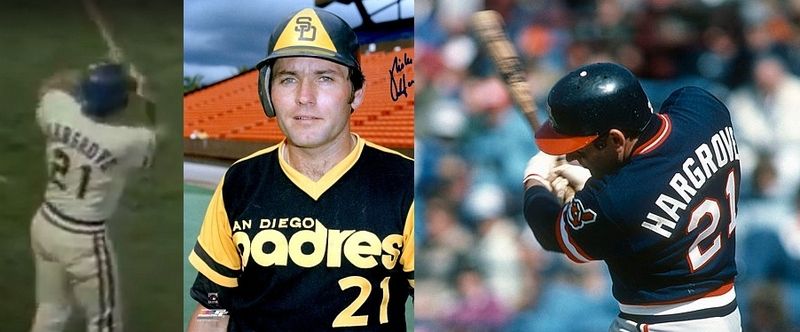
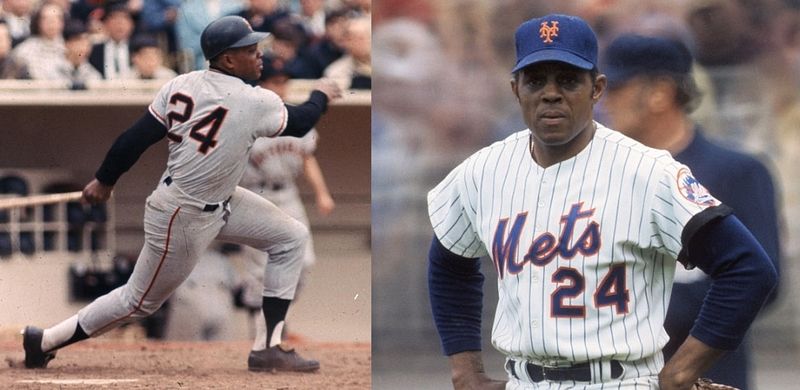
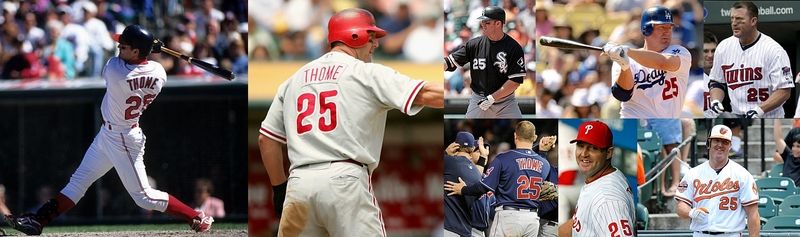
It's time for another installment of Ultimate Number Players! In case you've forgotten how this works, the Ultimate Number Player has to have worn a particular uniform number with every stint with every franchise he played for, and he must be (in my judgment) the best player to have played with the most franchises wearing that number. We've done them all from 1 to 20, so now we'll do another block of five.

Ultimate #21: Warren Spahn

It's hard to find a good photo of Spahn in a Giants uniform with his #21 visible. The closest thing I've found is grainy black-and-white footage from the infamous Marichal-Roseboro brawl where the back of his jersey can be seen among the chaos. For the photo collage, I chose the only other qualifying player with three franchises: Mike Hargrove. I know this looks terrible compared to some of the others I've made, but it was the best I could do.


Ultimate #22: Walt Weiss

Thank goodness he wore #22 for one season with the Athletics before embarking on his journey around the majors.


Ultimate #23: Ted Simmons

Several 23s had three franchises, but Simmons was by far the best of the lot.


Ultimate #24: Willie Mays

24 proved to be a difficult number to keep one's entire career, but the greatest player ever to wear it takes the prize here with his two franchises.


Ultimate #25: Jim Thome

I don't know how he did it, but Thome bounced around a ton, somehow always holding on to the coveted #25. This collage is a thing of beauty in my eyes.


Tuesday, July 31, 2018

Half the Guys Are Gone

For today's post, I''m just going to share some data I've compiled and you can make of it what you will.

At what point are half the players on a team deceased? If the total number of players (let's call it variable n) is odd, it'd be when the number of deceased players is equal to (n + 1 / 2). If you have an even number of players, it's when the number of deceased players is (n / 2). I looked at the years that were multiples of ten between 1910 and 1960 to see which players marked the halfway point of the players being deceased for each of them, and also how long it took to occur. For a couple from 1960, they didn't even reach that level till earlier this year. I also looked at how it compared to the average age of the team to see how strong the correlation was.


1910NameDeath DateYearsAvg Age
PittsburgHowie Camnitz3/2/19605028.3
Philadelphia (AL)Jack Coombs4/15/19574727.6
CincinnatiFrank Roth3/27/19554526.2
ClevelandHeinie Berger2/10/19544428.2
Boston (AL)Bunny Madden1/20/19544425.5
Chicago (AL)Fred Payne1/16/19544427.1
BrooklynRube Dessau5/6/19524225.9
New York (NL)Doc Crandall8/17/19514125.7
WashingtonDoc Ralston8/29/19504027.9
Boston (NL)Jim Riley3/25/19493926.5
DetroitMarv Peasley12/27/19483827.8
New York (AL)Walter Blair8/20/19483827.4
St. Louis (NL)Rebel Oakes3/1/19483826.4
Chicago (NL)Mordecai Brown2/14/19483829.0
St. Louis (AL)Hub Northen10/1/19473728.2
Philadelphia (NL)Kitty Bransfield5/1/19473729.0
MLB AVG41.427.3

r = -0.18


1920NameDeath DateYearsAvg Age
PittsburghBilly Southworth11/15/19694927.6
Philadelphia (AL)Chick Galloway11/7/19694924.7
New York (AL)Rip Collins5/27/19684827.8
ClevelandRay Caldwell8/17/19674729.3
BrooklynDoug Baird6/13/19674730.1
Chicago (NL)Hippo Vaughn5/29/19664629.3
Philadelphia (NL)Gene Paulette2/8/19664628.9
WashingtonBill Hollahan11/27/19654527.2
CincinnatiJimmy Ring7/6/19654529.1
Boston (AL)Wally Schang3/6/19654528.1
DetroitOscar Stanage11/11/19644428.9
St. Louis (AL)Roy Sanders7/8/19634328.5
Chicago (AL)Dickey Kerr5/4/19634329.4
Boston (NL)Ray Powell10/16/19624227.9
St. Louis (NL)Burt Shotton7/29/19624226.4
New York (NL)Frank Snyder1/5/19624226.9
MLB AVG45.228.1

r = -0.06


1930NameDeath DateYearsAvg Age
New York (NL)Hughie Critz1/10/19805027.2
ClevelandMilt Shoffner1/19/19784827.3
Boston (NL)Lance Richbourg9/10/19754529.6
CincinnatiMarty Callaghan6/23/19754529.6
New York (AL)Ownie Carroll6/8/19754527.0
DetroitJimmy Shevlin10/30/19744426.7
PittsburghSteve Swetonic4/22/19744426.7
Chicago (AL)Bennie Tate10/27/19734327.4
St. Louis (NL)Frankie Frisch3/12/19734329.6
Chicago (NL)Danny Taylor10/11/19724229.4
Boston (AL)Charlie Berry9/6/19724228.6
St. Louis (AL)General Crowder4/3/19724228.7
BrooklynRay Phelps7/7/19714128.9
Philadelphia (NL)Tripp Sigman3/8/19714127.1
WashingtonBobby Burke2/8/19714129.1
Philadelphia (AL)Pinky Higgins3/21/19693928.7
MLB AVG43.428.2

r = -0.35


1940NameDeath DateYearsAvg Age
Boston (NL)Hank Majeski8/9/19915126.3
Philadelphia (AL)Wally Moses10/10/19905026.9
New York (NL)Mickey Witek8/24/19905028.7
Philadelphia (NL)Neb Stewart6/8/19905027.4
St. Louis (NL)Creepy Crespi3/1/19905027.1
New York (AL)Lefty Gomez2/17/19894928.1
Chicago (NL)Zeke Bonura3/9/19874728.9
CincinnatiVince DiMaggio10/3/19864628.8
DetroitHank Greenberg9/4/19864629.4
St. Louis (AL)George Susce2/25/19864628.2
WashingtonSam West11/23/19854526.8
Boston (AL)Joe Glenn5/6/19854528.1
ClevelandHank Helf10/27/19844426.7
BrooklynGus Mancuso10/26/19844428.4
Chicago (AL)Joe Kuhel2/26/19844429.4
PittsburghEd Leip11/24/19834327.6
MLB AVG46.927.9

r = -0.31


1950NameDeath DateYearsAvg Age
WashingtonSandy Consuegra11/16/20055528.6
St. Louis (AL)Ribs Raney7/7/20035325.5
New York (AL)Joe Ostrowski1/3/20035329.2
Chicago (NL)Harry Chiti1/31/20025227.5
Boston (AL)Bob Gillespie11/4/20015129.8
New York (NL)Bill Rigney2/20/20015127.0
St. Louis (NL)Tom Poholsky1/6/20015129.1
Boston (NL)Willard Marshall11/5/20005029.2
Chicago (AL)John Perkovich9/16/20005028.4
Philadelphia (NL)Ken Heintzelman8/14/20005026.5
BrooklynPee Wee Reese8/14/19994927.5
ClevelandEarly Wynn4/4/19994929.2
Philadelphia (AL)Ben Guintini12/2/19984831.2
DetroitHal Newhouser11/10/19984828.2
PittsburghStan Rojek7/9/19974728.6
CincinnatiBobby Adams2/13/19974727.5
MLB AVG50.328.3

r = -0.19


1960NameDeath DateYearsAvg Age
ClevelandTito Francona2/13/20185828.2
Los AngelesWally Moon2/9/20185827.7
DetroitChico Fernandez6/11/20165628.6
San FranciscoJim Davenport2/18/20165626.8
Kansas CityKen Johnson11/21/20155528.3
St. LouisRay Sadecki11/17/20145428.6
PhiladelphiaAl Dark11/13/20145426.1
Chicago (AL)Gene Freese6/19/20135330.8
MilwaukeeStan Lopata6/15/20135330.0
BostonTom Borland3/2/20135329.0
Chicago (NL)Ed Bouchee1/23/20135328.1
WashingtonDon Mincher3/4/20125227.4
New YorkAndy Carey12/15/20115128.1
PittsburghGino Cimoli2/12/20115128.6
BaltimoreAl Pilarcik9/20/20105027.8
CincinnatiWhitey Lockman3/17/20094927.3
MLB AVG53.528.2

r = -0.05


The r variable, for anyone unaware, shows the strength of correlation. A negative number, as we see in each of these cases, shows that the higher the number of years until a team reaches the halfway point, the younger the average age of the team is. That's consistent with what we'd expect, but as we can see, the correlation isn't particularly strong in any of these cases. There's no higher than a 35% correlation in any instance, and in some cases it's close to zero.

I'm also not sure why from 1920 to 1930 the average number of years till a team reached the halfway point actually dropped. You'd think we'd see a steady rise, considering the increases in life expectancy over time.

I suppose I'll have to compile the data for more years than just these, to see if we can spot any trends, because six different years isn't exactly the largest sample size. We'll see what comes of that. To be continued? Maybe?

Friday, June 29, 2018

Missed It By That Much

My earlier post about "Interregnum Players" has an interesting variant: Players whose stints with a team include the years before and after a championship, but not the championship years themselves. This happens more often than you might realize, and who has the full list? Baseball Junk Drawer, of course!

Here are the guys who were there on the way up and the way down, but not at the pinnacle. In addition to having played for the franchise in the years bookending a World Series championship, I also made the requirement that they may not have won a World Series with the franchise in question in a different year, though winning one with a different club is acceptable. That's why you'll see a World Series MVP on this list, but no Adam Wainwright.


NameYears With Team
Doc Marshall1904, 1906 NYG
Walt Tragesser1913, 1915-19 BSN
Walter Mueller1922-24, 1926 PIT
George Puccinelli1930, 1932 STL
Dixie Walker*1931, 1933-36 NYY
Charlie Wilson1932-33, 1935 STL
Red Phillips1934, 1936 DET
Mike Chartak1940, 1942 NYY
Ed Levy1942, 1944 NYY
Rufe Gentry1943-44, 1946-48 DET
Johnny Gorsica1940-44, 1946-47 DET
Pinky Higgins1939-44, 1946 DET
Dick Wakefield1941, 1943-44, 1946-49 DET
Bud Souchock1946, 1948 NYY
Bob Darnell1954, 1956 BRO
Dick Williams1951-54, 1956 BRO
Humberto Robinson1955-56, 1958 MLN
Bob Roselli1955-56, 1958 MLN
Al Jackson1959, 1961 PIT
Joe Moeller1962, 1964, 1966-71 LAD
Bart Shirley1964, 1966, 1968 LAD
Mike Jorgensen1968, 1970-71, 1980-83 NYM
Gene Garber1969-70, 1972 PIT
Ray Knight1974, 1977-81 CIN
Oscar Gamble1976, 1979-84 NYY
Joe Beckwith1979-80, 1982-83, 1986 LAD
Manny Mota1969-80, 1982 LAD
Floyd Rayford1980, 1982, 1984-87 BAL
Clint Hurdle1983, 1985, 1987 NYM
Mariano Duncan1985-87, 1989 LAD
Mike Bielecki1991-92, 1994, 1996-97 ATL
Terry Pendleton1991-94, 1996 ATL
Mike Stanley1992-95, 1997 NYY
Chris Hammond1993-96, 1998 FLA
Andy Larkin1996, 1998 FLA
Matt Mantei1995-96, 1998-99 FLA
Danny Klassen1998-2000, 2002 ARI
Todd Stottlemyre1999-2000, 2002 ARI
Bart Miadich2001, 2003 ANA
Abraham Nunez2002, 2004 FLA
Sandy Alomar2001-04, 2006 CHW
Craig Hansen2005-06, 2008 BOS
David Pauley2006, 2008 BOS
Chad Moeller2008, 2010 NYY
Bryan Anderson2010, 2012 STL
Steven Hill2010, 2012 STL
Eric Surkamp2011, 2013 SFG
Nick Noonan*2013, 2015 SFG
Zac Rosscup*2013-15, 2017 CHC

Nick Noonan and Zac Rosscup are still active, so it's theoretically possible that they could win a World Series with their respective franchises. I didn't look into the 2017 Astros, since you really can't determine whether someone belongs on this list until a team is no longer defending its title.

The only other asterisked player is Dixie Walker, who missed out on the 1932 Yankees' season. I put him on this list despite the fact that he briefly played with the 1936 champions, because they got rid of him early in the season, and I doubt he got a share of the World Series money.

It's true that some of these guys were in the dugout when their teams won, either as coaches or injured players, but not getting to participate in any game itself during the season has to sting just a little.

Tuesday, May 29, 2018

The Pythagorean Pennant

The game isn't played on paper. This we all know. But that doesn't stop us from asking whether the results we see were the ones we should have expected.

One concept that has gained popularity over the years in advanced sports analysis is the concept of Pythagorean Won-Lost Record. For those unfamiliar, Pythagorean Won-Lost Record uses a formula to determine the number of wins and losses a team should be expected to have based on the number of runs scored versus runs allowed. Few teams play precisely to their Pythagorean expectations, but most fall within three games of it. There are always, however, teams that wildly exceed or fall short of their expectations, and in a pennant race, those games can be the difference between a trip to the World Series and an early winter break.

Before the divisional play era, only one team from each league made it to the postseason. Based on Pythagorean W-L, how often did we see the World Series matchup that should've been expected? The chart below shows who won the Pythagorean pennant each year during that era. Teams marked with red are different than the actual winners, and boxes marked with blue are ones where tiebreakers would've had to be played to determine the winner.


NLAL
1903Pittsburg Pirates (86-54)Boston Americans (90-48)
1905New York Giants (105-48)Chicago White Sox (97-55)
1906Chicago Cubs (115-37)Cleveland Naps (98-55)
1907Chicago Cubs (102-50)Detroit Tigers (93-57)
1908New York Giants (101-53)Cleveland Naps (92-62)
1909Chicago Cubs (109-44)Philadelphia Athletics (102-51)
1910Chicago Cubs (101-53)Philadelphia Athletics (103-47)
1911New York Giants (99-54)Philadelphia Athletics (99-52)
1912New York Giants (100-51)Boston Red Sox (102-50)
1913New York Giants (95-57)Philadelphia Athletics (97-56)
1914Boston Braves (89-64)Philadelphia Athletics (99-53)
1915Philadelphia Phillies (92-60)Chicago White Sox (100-54)
1916Brooklyn Robins (92-62)Chicago White Sox (90-64)
1917New York Giants (100-54)Chicago White Sox (101-53)
1918Chicago Cubs (83-46)Boston Red Sox (76-50)
1919Cincinnati Reds (92-48)Chicago White Sox (84-56)
1920Brooklyn Robins/New York Giants (93-61)Cleveland Indians/New York Yankees (97-57)
1921New York Giants (95-58)New York Yankees (96-57)
1922New York Giants (95-59)St. Louis Browns (98-56)
1923New York Giants (92-61)New York Yankees (95-57)
1924New York Giants (96-57)Washington Senators (92-62)
1925Pittsburgh Pirates (93-60)Washington Senators (90-61)
1926St. Louis Cardinals (90-64)Cleveland Indians (90-64)
1927Pittsburgh Pirates (92-62)New York Yankees (109-45)
1928St. Louis Cardinals (94-60)Philadelphia Athletics (97-56)
1929Chicago Cubs (94-58)Philadelphia Athletics (100-50)
1930St. Louis Cardinals (94-60)Washington Senators (95-59)
1931St. Louis Cardinals (97-57)New York Yankees (100-53)
1932Chicago Cubs (86-68)New York Yankees (99-55)
1933Chicago Cubs/New York Giants Washington Senators (93-59)
1934New York Giants (95-58)Detroit Tigers (98-56)
1935Chicago Cubs (101-53)Detroit Tigers (97-54)
1936Chicago Cubs (93-61)New York Yankees (102-51)
1937Chicago Cubs/New York Giants New York Yankees (103-51)
1938Chicago Cubs (88-64)New York Yankees (97-55)
1939Cincinnati Reds (95-59)New York Yankees (111-40)
1940Cincinnati Reds (96-57)Detroit Tigers (92-62)
1941Brooklyn Dodgers (99-55)New York Yankees (96-58)
1942St. Louis Cardinals (107-47)New York Yankees (107-47)
1943St. Louis Cardinals (101-53)New York Yankees (92-62)
1944St. Louis Cardinals (107-47)St. Louis Browns (88-66)
1945Chicago Cubs (99-55)NYY/DET/WSH/SLB
1946St. Louis Cardinals (97-59)Boston Red Sox (97-57)
1947St. Louis Cardinals (91-63)New York Yankees (100-54)
1948Boston Braves (93-60)Cleveland Indians (104-51)
1949Brooklyn Dodgers (98-56)Boston Red Sox (97-57)
1950Brooklyn Dodgers (88-66)New York Yankees (96-58)
1951Brooklyn Dodgers (96-61)New York Yankees (94-60)
1952Brooklyn Dodgers (94-59)New York Yankees (95-59)
1953Brooklyn Dodgers (99-55)New York Yankees (101-50)
1954New York Giants (97-57)Cleveland Indians (104-50)
1955Brooklyn Dodgers (95-58)New York Yankees (97-57)
1956Milwaukee Braves (92-62)New York Yankees (98-56)
1957Milwaukee Braves (93-61)New York Yankees (98-56)
1958Milwaukee Braves (92-62)New York Yankees (96-58)
1959Milwaukee Braves (89-67)Cleveland Indians (87-67)
1960Pittsburgh Pirates (92-62)Chicago White Sox (90-64)
1961San Francisco Giants (89-65)New York Yankees (103-59)
1962San Francisco Giants (100-65)New York Yankees (94-68)
1963St. Louis Cardinals (94-68)New York Yankees (100-61)
1964Cincinnati Reds (92-70)Chicago White Sox (99-63)
1965Cincinnati Reds (93-69)Minnesota Twins (100-62)
1966Los Angeles Dodgers (97-65)Baltimore Orioles (96-64)
1967St. Louis Cardinals (97-64)Boston Red Sox (93-69)
1968St. Louis Cardinals (96-66)Detroit Tigers (103-59)


It's heartening to see that most years the "correct" team wins.There are some long stretches here of black ink.

It's interesting to note that based on this data, several historical teams could be considered overrated or underrated. Connie Mack's Athletics from the "$100,000 Infield" era should've won five of six pennants, rather than the mere four of five they actually won. Their American League successors should've been the Chicago White Sox, if only they hadn't underperformed. The Red Sox of that era would've been the exceptions to two dynasties, rather than one of their own.

Cleveland could've had an additional four American League pennants in their history had their on-field play matched the on-paper expectations. Napoleon Lajoie wouldn't have gone down in history as one of the best players never to reach the postseason, with two World Series appearances during his time leading the "Naps."

The powerhouse Athletics from 1929-31 would've won only one pennant during that span, but they would've had an additional one in 1928, perhaps giving Ty Cobb a World Series title in his final season.

The National League also sees some teams look more dynastic than reality proved them to be. The Cubs might've  potentially won an astounding six pennants in seven years between 1932 and 1938. Those Cubs always came up short in the World Series, but history should remember them much more favorably than it does.

The Brooklyn Dodgers stole the 1947 pennant from their rivals in St. Louis in Jackie Robinson's debut season, but it appears that they, not the Yankees, should've won five straight pennants between 1949 and 1953. While the Red Sox should've captured the 1949 AL flag, we would've had a Yankees-Dodgers matchup four straight seasons to start the 1950s.

And how about those Milwaukee Braves? That immensely talented club should've won four in a row during the 1956-59 seasons, not just the two they did.

The Koufax-era Dodgers also appear to be overrated, winning pennants only in 1955, when he was a benchwarming rookie, and 1966, when he pitched his arm off in his final season. The Cincinnati Reds and San Francisco Giants are the great forgotten teams of the '60s.

Tuesday, April 17, 2018

Interregnum Players

Not every player gets to be a part of the championship teams. Some lucky (or unlucky) few do, however, get to join the roster in the aftermath of a championship and skip out just before the next one. In so doing, they become icons of the years in between.

The term I have coined for such a man is an "Interregnum Player." What are the exact criteria?

1. He must not have played for the franchise in question the season they won a World Series (though I do make a slight exception for one player).

2. He must have played for the franchise in question in at least 80% of the seasons between two championships. The Eighty-Percenters are marked with an asterisk below.

Here's the full list, in alphabetical order:

NameYears With Team
Mike Adamson1967-1969 BAL
Doug Baker1988-1990 MIN
Dave Berg*1998-2001 FLA
Michael Bowden2008-2012 BOS
Greg Brock*1982-1986 LAD
Gino Cimoli1956-1958 BRO/LAD
Donn Clendenon*1961-1968 PIT
Wilbur Cooper*1912-1924 PIT
Vic Darensbourg1998-2002 FLA
Ryan Dempster1998-2002 FLA
Larry Doyle*1907-16, 1918-1920 NYG
Bill Drescher1944-1946 NYY
Jim Dwyer1988-1990 MIN
Art Fletcher*1909-1920 NYG
Fred Frankhouse1927-1930 STL
Jason Giambi*2002-2008 NYY
Rick Honeycutt*1983-1987 LAD
Randy Jackson1956-1958 BRO/LAD
Freddie Lindstrom*1924-1932 NYG
Jed Lowrie*2008-2011 BOS
Ryan Ludwick2007-2010 STL
Don Mattingly*1982-1995 NYY
Al McBean*1961-68, 1970 PIT
Bill McGee1935-1941 STL
Kevin Millar1998-2002 FLA
Johnny Mize*1936-1941 STL
John Moses1988-1990 MIN
Manny Mota*1969-1980 LAD
Mike Mussina2001-2008 NYY
Steve Roser1944-1946 NYY
Brendan Ryan2007-2010 STL
Jesus Sanchez*1998-2001 FLA
Roy Sherid1929-1931 NYY
Ted Simmons*1968-1980 STL
Mario Soto*1977-1988 CIN
Don Sutton1966-1980 LAD
Russ Van Atta1933-1935 NYY
Preston Wilson1998-2002 FLA

Some of you are now rightfully pointing out that Don Sutton rejoined the Dodgers for the 1988 season, when they won the World Series, so he technically shouldn't qualify for this list based on the original criteria. However, I decided to make an exception for him, because A. there was a significant gap between his rejoining the Dodgers and his original stint, B. he was released before the end of the 1988 season and didn't get to participate in the World Series, and C. how often do you get a chance to include a guy who fits a 15-year championship gap so precisely? He had to be in here. He might be the most perfect example of the Interregnum Player if not for that technicality.

Monday, March 12, 2018

Is the 1990s Cub Pitcher Death Phenomenon Unusual?

With the recent release of the February 2018 SABR Biographical Research Committee newsletter, it was revealed that a few deaths from years past slipped through the cracks. One of them was former lefty reliever Doug Slaten, who last played in 2012, but whose 2016 death somehow evaded the notice of the baseball world. Another was former journeyman righty reliever Randy Veres, who also died in 2016. The thing about Veres, though, is that he is yet another deceased pitcher from the 1990s-era Cubs, as he showed up on their staff in 1994.

The tally of Cub pitcher deaths from 1991 to 2000 (yes, I shifted the window slightly to include one player) now stands as follows:

Rod Beck (June 23, 2007)
Geremi Gonzalez (May 25, 2008)
Kevin Foster (October 11, 2008)
Dave Smith (December 17, 2008)
Jessie Hollins (July 9, 2009)
Frank Castillo (July 28, 2013)
Ruben Quevedo (June 7, 2016)
Randy Veres (November 7, 2016)
Anthony Young (June 27, 2017)

That's nine players, all hurlers. No Cub non-pitcher deaths have been reported from that same era, and no deaths at all have been reported from the 1986-90 Cubs.

Out of curiosity, I've decided to compare the number of Cub deaths from 1991-2000 to other teams from the same era. Let's see how many individual players have been reported dead from each franchise:


DeathsPitchers
Angels42
Astros106
Athletics42
Blue Jays54
Braves42
Brewers30
Cardinals21
Cubs99
Devil Rays21
Diamondbacks00
Dodgers31
Expos52
Giants53
Indians43
Mariners32
Marlins42
Mets52
Orioles96
Padres50
Phillies74
Pirates22
Rangers53
Red Sox52
Reds22
Rockies43
Royals54
Tigers95
Twins30
White Sox30
Yankees33

The data show the Astros with the most total player deaths, but the Cubs have the lead in pitcher deaths, with three more than the Orioles and Astros, who tie for second. While it's probably nothing more than a statistical anomaly, it does seem odd that I picked up on the trend in 2013 and it's only continued since then. You'd think at some point it would even out a bit. We'll have to keep our eyes on this phenomenon.

Wednesday, February 28, 2018

Final 12 Players By Decade

Active players from the 1990s have been dwindling year by year, and the only ones left in Spring Training 2018 are Bartolo Colon and Adrian Beltre, both of the Texas Rangers. Colon seems to be close to the end, but Beltre has become something of an ageless wonder, putting up productive seasons even into his late 30s.

In honor of a decade's players dropping off the scene, I thought it would be fun to look at previous decades and who their final representatives at the major league level were. Some of these are pretty interesting.

1900s

Stuffy McInnis 8/1/1927
Zack Wheat 9/21/1927
Walter Johnson 9/30/1927
Tris Speaker 8/30/1928
Ty Cobb 9/11/1928
Jimmy Austin 10/6/1929
Johnny Evers 10/6/1929
Eddie Collins 8/5/1930
Gabby Street 9/20/1931
Jack Quinn 7/7/1933
Nick Altrock 10/1/1933
Charley O'Leary 9/30/1934

We have four Hall of Famers at the ends of their careers, five coaches making publicity stunt appearances, one Hall of Famer who was basically just a coach at that point, and two guys who just played a long time. A nice snapshot of the era. An interesting note is that four of the five Hall of Famers played their final game with the Philadelphia Athletics.

1910s

Dazzy Vance 8/14/1935
Bob O'Farrell 9/23/1935
Sad Sam Jones 9/28/1935
Rabbit Maranville 9/29/1935
Tom Zachary 5/28/1936
George Uhle 9/22/1936
Charlie Grimm 9/23/1936
Rogers Hornsby 7/20/1937
Frankie Frisch 8/5/1937
Jesse Haines 9/10/1937
Waite Hoyt 5/15/1938
Jimmy Dykes 10/1/1939

The legendary Babe Ruth just missed the cut here. Here we see six Hall of Famers (about half of which probably shouldn't be in, and one of which only achieving that status thanks to one of the legitimate Hall of Famers on the list). The last man standing though, like Charley O'Leary the decade before, wasn't primarily a player, but a member of the dugout staff taking the field.

1920s

Bill Dickey 9/8/1946
Rollie Hemsley 4/17/1947
Art Herring 6/15/1947
Mel Ott 7/11/1947
Mel Harder 9/7/1947
Rick Ferrell 9/14/1947
Red Ruffing 9/15/1947
Al Lopez 9/16/1947
Si Johnson 9/25/1947
Doc Cramer 5/12/1948
Earl Caldwell 9/15/1948
Bobo Newsom 9/17/1953

Now here's an odder list. A lot of mediocre players on this one. There are three I'd consider legit Hall of Fame players, one I'd consider a legit Hall of Fame manager, and one who was a fine player but not a deserving Hall of Famer. And none of the Hall of Famers appear in the final four. And the last guy standing wasn't a coach or manager giving the fans a token appearance. How times change.

1930s

Phil Cavarretta 5/8/1955
Hank Majeski 7/26/1955
Eddie Joost 9/25/1955
Walt Masterson 9/24/1956
Bob Feller 9/30/1956
Dizzy Trout 9/11/1957
Bob Kennedy 9/29/1957
Murry Dickson 9/14/1959
Enos Slaughter 9/29/1959
Mickey Vernon 9/27/1960
Ted Williams 9/28/1960
Early Wynn 9/13/1963

Looks like old Early was late to leave the game, hanging on for a full three seasons as the only active player from the 1930s. On this list we have four Hall of Famers, two of which I'd definitely put in my personal Hall, while the others are borderline choices. I'll bet even the most hardcore fans couldn't have named Walt Masterson. I know I almost certainly wouldn't have thought of him.

1940s

Billy Pierce 10/3/1964
Duke Snider 10/3/1964
Yogi Berra 5/9/1965
Roy Sievers 5/9/1965
Nellie Fox 7/25/1965
Satchel Paige 9/25/1965
Warren Spahn 10/1/1965
Robin Roberts 9/3/1966
Del Crandall 9/25/1966
Joe Nuxhall 10/2/1966
Smoky Burgess 10/1/1967
Curt Simmons 10/1/1967
Minnie Minoso 10/5/1980

This is actually a final 13, since Pierce and Snider played their last game on the same day. Once again, we see six Hall of Famers, though none are in the last five. Minoso has his supporters, though. Paige's appearance was a publicity stunt too, of course.

1950s

Frank Robinson 9/18/1976
Tony Taylor 9/29/1976
Tommy Davis 10/2/1976
Billy Williams 10/2/1976
Hank Aaron 10/3/1976
Mike Cuellar 5/3/1977
Brooks Robinson 8/13/1977
Ron Fairly 9/23/1978
Willie McCovey 7/6/1980
Tim McCarver 10/5/1980
Minnie Minoso 10/5/1980
Jim Kaat 7/1/1983

Like Early Wynn before him, Jim Kaat was the sole player repping the fabulous '50s for three seasons. Five Hall of Famers on this list, and one who, as mentioned before, has his supporters. Minnie Minoso was brilliant for making that cameo in a non-contending season for the White Sox. I've noticed that if you look at the last "serious" players for each of these decades, the guy you come up with has always been a pitcher so far. Will that change?

1960s

Joe Niekro 4/29/1988
Gene Garber 7/1/1988
Don Sutton 8/9/1988
Graig Nettles 10/1/1988
Ted Simmons 10/2/1988
Tommy John 5/25/1989
Darrell Evans 10/1/1989
Bill Buckner 5/30/1990
Jerry Reuss 10/3/1990
Rick Dempsey 9/27/1992
Carlton Fisk 6/22/1993
Nolan Ryan 9/22/1993

Not yet. But interestingly, only three Hall of Famers on this list, two of which were the last two out the door. Nettles and Simmons have supporters, though.

1970s

Ozzie Smith 10/17/1996
Rick Honeycutt 5/2/1997
Eddie Murray 9/20/1997
Danny Darwin 9/22/1998
Dave Stieb 9/25/1998
Paul Molitor 9/27/1998
Dennis Eckersley 10/2/1998
Dennis Martinez 10/14/1998
Mike Morgan 9/2/2002
Tim Raines 9/29/2002
Rickey Henderson 9/19/2003
Jesse Orosco 9/27/2003

Another pitcher closing out the list. Good old lefty specialists like Jesse Orosco who play forever. Six Hall of Famers once again.

1980s

Kent Mercker 5/30/2008
Tom Glavine 8/14/2008
Kenny Rogers 9/14/2008
Rudy Seanez 9/28/2008
Greg Maddux 10/15/2008
Tom Gordon 5/3/2009
Gary Sheffield 9/30/2009
Randy Johnson 10/4/2009
John Smoltz 10/10/2009
Ken Griffey Jr. 5/31/2010
Jamie Moyer 5/27/2012
Omar Vizquel 10/3/2012

Finally! The last guy on the list isn't a pitcher! Five Hall of Famers make the cut here. Kent Mercker and Rudy Seanez seem like the most unlikely guys to pop up here.

Before we know it, we'll be counting down the last guys from the 2000s. Enjoy the players of this era while they're still with us. One day you wake up, see lists this, and find yourself feeling old.