
On what I believe was the first day in Major League history with two tiebreakers played, both teams I was rooting for lost. Needless to say, I'm not terribly thrilled as I write this post. But I have a duty to the baseball community to record these predictions which will almost certainly be wrong so that we can all have a good laugh over them someday. My preseason prediction was a Yankees-Dodgers World Series. Do I stand by that prediction? Let's just take this round by round.
Stupid Wild Card Games That Nobody Wanted
Cubs over Rockies
Yankees over Athletics
While it was fun pulling for the Rockies as they marched to the playoffs, the fact remains that they simply are not a great team. The Cubs have much more depth, and when you throw in the fact that Chicago has home field advantage, they're the easy favorite here. Obviously, anything can happen in one game, but I'm going with what I think is the more likely outcome.
As for the American League, I think the Yankees have just a bit more magic on their side, and I'm not going to bet against them.
Division Series
Brewers over Cubs
Dodgers over Braves
Yankees over Red Sox
Indians over Astros
The way the Brewers have been playing lately, I don't think my beloved Cubs are in a very favorable position if they face them. They've been unbeatable. If you recall, I actually picked them at the beginning of the season to be the surprise division winner, so I'm not always wrong.
I'm taking the Dodgers over the Braves, just because I'm not confident that the Braves are all there yet. The Dodgers have been a lot better in recent postseasons than earlier this decade, and I think they have the be the favorite this year too.
Yankees over the Red Sox? The Red Sox team that won 108 games? Yes, I'm going to make a bold prediction that the juggernaut from Boston is actually overrated and will choke in the first round like the Indians did last year. Besides, this Yankee team ain't exactly Jell-O pudding, with 100 wins of their own.
But wait...I'm also predicting the Indians will beat the powerhouse Astros? Now I'm just loony, right? Two huge first round upsets in the same league? I'll admit that the Astros are a much better team than this year's Indians, but the postseason really is a crapshoot, and I think these Indians could pull it off. They have unfinished business from last year, and they might be just a little more determined than the defending champs.
League Championship Series
Brewers over Dodgers
Indians over Yankees
So it looks like I'm not sticking with my preseason pennant predictions! I have both of them losing in the LCS.
First, the Brewers. I think their momentum has given them the confidence to ride this thing all the way to the World Series. They're playing like a team whose time has come, and despite them beating the Cubs, I have to tip my hat to them. This team looks special.
Indians over the Yankees? Yup. The Indians looked like a team of destiny last year, but the Yankees spoiled the party in the first round. Remember that unfinished business I mentioned above? Yep. It's time for the Indians to get their payback.
World Series
Indians over Brewers
Remember the Cardinals of 2004-06? In 2004, they won 100 games and the pennant, but lost to the Red Sox, who were breaking the once-famous 86-year drought. In 2005, they won 100 games again, but this time they lost in the LCS to the Astros. In 2006, they squeaked into the playoffs by winning a weak division, but unlike the prior two years, they won the whole thing. Go figure.
I'm predicting the Indians to follow a similar pattern: Lose to a team getting a monkey off its back, lose before the World Series, then win the World Series with a team whose record isn't that impressive but played in a weak division. We have the precedent. It's all there for the Indians' taking. Can this be Cleveland's year? That's what I'm going with. And unlike last year, I might even be correct.
So there you have my predictions. Be sure to come back in a month and have a good chuckle at how wrong they were!
Tuesday, October 2, 2018


Saturday, September 29, 2018
Oldest Ringless Players: 2018 Edition
And then there were ten! With the elimination of the Cardinals this afternoon, we now know who our ten postseason teams are, and we can check out this year's edition of the Oldest Ringless Players!
Atlanta Braves: Peter Moylan (b. December 2, 1978)
Boston Red Sox: Brandon Phillips (b. June 28, 1981)
Chicago Cubs: Jorge De La Rosa (b. April 5, 1981)
Cleveland Indians: Rajai Davis (b. October 19, 1980)
Colorado Rockies: Chris Iannetta (b. April 8, 1983)
Houston Astros: Martin Maldonado (b. August 16, 1986)
Los Angeles Dodgers: Rich Hill (b. March 11, 1980)
Milwaukee Brewers: Curtis Granderson (b. March 16, 1981)
New York Yankees: Neil Walker (b. September 10, 1985)
Oakland Athletics: Fernando Rodney (b. March 18, 1977)
This crew feels different than most past editions. Fernando Rodney seems like he's shown up here a lot, but the others, not so much. The Rockies deserve an asterisk, since Seunghwan Oh is older than Iannetta and has never won a Major League World Series, but he's won several Korean Series, so I don't think he should count.
I'll be back with my predictions for the playoffs once we have all the races settled.
Atlanta Braves: Peter Moylan (b. December 2, 1978)
Boston Red Sox: Brandon Phillips (b. June 28, 1981)
Chicago Cubs: Jorge De La Rosa (b. April 5, 1981)
Cleveland Indians: Rajai Davis (b. October 19, 1980)
Colorado Rockies: Chris Iannetta (b. April 8, 1983)
Houston Astros: Martin Maldonado (b. August 16, 1986)
Los Angeles Dodgers: Rich Hill (b. March 11, 1980)
Milwaukee Brewers: Curtis Granderson (b. March 16, 1981)
New York Yankees: Neil Walker (b. September 10, 1985)
Oakland Athletics: Fernando Rodney (b. March 18, 1977)
This crew feels different than most past editions. Fernando Rodney seems like he's shown up here a lot, but the others, not so much. The Rockies deserve an asterisk, since Seunghwan Oh is older than Iannetta and has never won a Major League World Series, but he's won several Korean Series, so I don't think he should count.
I'll be back with my predictions for the playoffs once we have all the races settled.
Tuesday, August 28, 2018
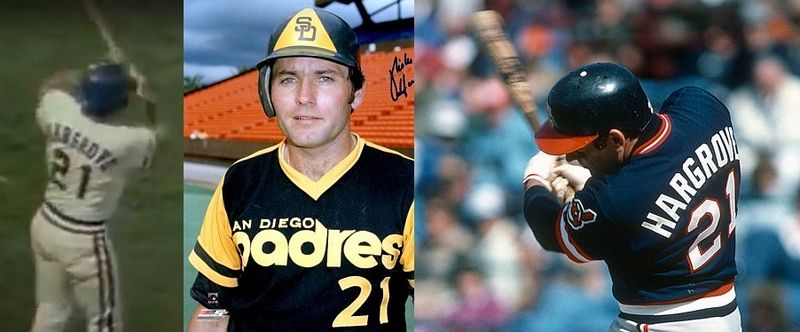
Ultimate Number Players: #21-25
It's time for another installment of Ultimate Number Players! In case you've forgotten how this works, the Ultimate Number Player has to have worn a particular uniform number with every stint with every franchise he played for, and he must be (in my judgment) the best player to have played with the most franchises wearing that number. We've done them all from 1 to 20, so now we'll do another block of five.
Ultimate #21: Warren Spahn
It's hard to find a good photo of Spahn in a Giants uniform with his #21 visible. The closest thing I've found is grainy black-and-white footage from the infamous Marichal-Roseboro brawl where the back of his jersey can be seen among the chaos. For the photo collage, I chose the only other qualifying player with three franchises: Mike Hargrove. I know this looks terrible compared to some of the others I've made, but it was the best I could do.

Ultimate #22: Walt Weiss
Thank goodness he wore #22 for one season with the Athletics before embarking on his journey around the majors.

Ultimate #23: Ted Simmons
Several 23s had three franchises, but Simmons was by far the best of the lot.

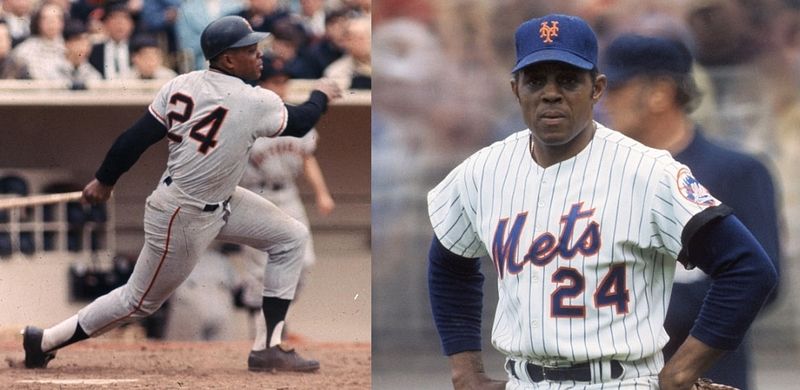
Ultimate #24: Willie Mays
24 proved to be a difficult number to keep one's entire career, but the greatest player ever to wear it takes the prize here with his two franchises.

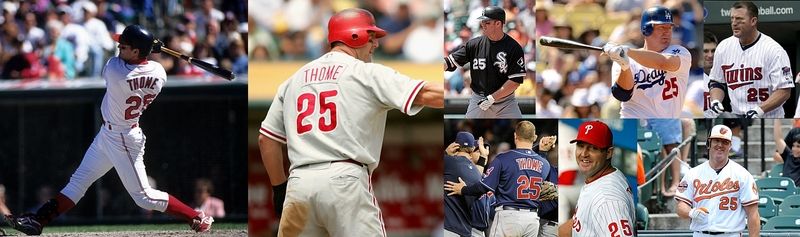
Ultimate #25: Jim Thome
I don't know how he did it, but Thome bounced around a ton, somehow always holding on to the coveted #25. This collage is a thing of beauty in my eyes.

Ultimate #21: Warren Spahn
It's hard to find a good photo of Spahn in a Giants uniform with his #21 visible. The closest thing I've found is grainy black-and-white footage from the infamous Marichal-Roseboro brawl where the back of his jersey can be seen among the chaos. For the photo collage, I chose the only other qualifying player with three franchises: Mike Hargrove. I know this looks terrible compared to some of the others I've made, but it was the best I could do.
Ultimate #22: Walt Weiss
Thank goodness he wore #22 for one season with the Athletics before embarking on his journey around the majors.

Ultimate #23: Ted Simmons
Several 23s had three franchises, but Simmons was by far the best of the lot.

Ultimate #24: Willie Mays
24 proved to be a difficult number to keep one's entire career, but the greatest player ever to wear it takes the prize here with his two franchises.
Ultimate #25: Jim Thome
I don't know how he did it, but Thome bounced around a ton, somehow always holding on to the coveted #25. This collage is a thing of beauty in my eyes.
Tuesday, July 31, 2018
Half the Guys Are Gone
For today's post, I''m just going to share some data I've compiled and you can make of it what you will.
At what point are half the players on a team deceased? If the total number of players (let's call it variable n) is odd, it'd be when the number of deceased players is equal to (n + 1 / 2). If you have an even number of players, it's when the number of deceased players is (n / 2). I looked at the years that were multiples of ten between 1910 and 1960 to see which players marked the halfway point of the players being deceased for each of them, and also how long it took to occur. For a couple from 1960, they didn't even reach that level till earlier this year. I also looked at how it compared to the average age of the team to see how strong the correlation was.
r = -0.18
r = -0.06
r = -0.35
r = -0.31
r = -0.19
r = -0.05
The r variable, for anyone unaware, shows the strength of correlation. A negative number, as we see in each of these cases, shows that the higher the number of years until a team reaches the halfway point, the younger the average age of the team is. That's consistent with what we'd expect, but as we can see, the correlation isn't particularly strong in any of these cases. There's no higher than a 35% correlation in any instance, and in some cases it's close to zero.
I'm also not sure why from 1920 to 1930 the average number of years till a team reached the halfway point actually dropped. You'd think we'd see a steady rise, considering the increases in life expectancy over time.
I suppose I'll have to compile the data for more years than just these, to see if we can spot any trends, because six different years isn't exactly the largest sample size. We'll see what comes of that. To be continued? Maybe?
At what point are half the players on a team deceased? If the total number of players (let's call it variable n) is odd, it'd be when the number of deceased players is equal to (n + 1 / 2). If you have an even number of players, it's when the number of deceased players is (n / 2). I looked at the years that were multiples of ten between 1910 and 1960 to see which players marked the halfway point of the players being deceased for each of them, and also how long it took to occur. For a couple from 1960, they didn't even reach that level till earlier this year. I also looked at how it compared to the average age of the team to see how strong the correlation was.
| 1910 | Name | Death Date | Years | Avg Age |
|---|---|---|---|---|
| Pittsburg | Howie Camnitz | 3/2/1960 | 50 | 28.3 |
| Philadelphia (AL) | Jack Coombs | 4/15/1957 | 47 | 27.6 |
| Cincinnati | Frank Roth | 3/27/1955 | 45 | 26.2 |
| Cleveland | Heinie Berger | 2/10/1954 | 44 | 28.2 |
| Boston (AL) | Bunny Madden | 1/20/1954 | 44 | 25.5 |
| Chicago (AL) | Fred Payne | 1/16/1954 | 44 | 27.1 |
| Brooklyn | Rube Dessau | 5/6/1952 | 42 | 25.9 |
| New York (NL) | Doc Crandall | 8/17/1951 | 41 | 25.7 |
| Washington | Doc Ralston | 8/29/1950 | 40 | 27.9 |
| Boston (NL) | Jim Riley | 3/25/1949 | 39 | 26.5 |
| Detroit | Marv Peasley | 12/27/1948 | 38 | 27.8 |
| New York (AL) | Walter Blair | 8/20/1948 | 38 | 27.4 |
| St. Louis (NL) | Rebel Oakes | 3/1/1948 | 38 | 26.4 |
| Chicago (NL) | Mordecai Brown | 2/14/1948 | 38 | 29.0 |
| St. Louis (AL) | Hub Northen | 10/1/1947 | 37 | 28.2 |
| Philadelphia (NL) | Kitty Bransfield | 5/1/1947 | 37 | 29.0 |
| MLB AVG | 41.4 | 27.3 |
r = -0.18
| 1920 | Name | Death Date | Years | Avg Age |
|---|---|---|---|---|
| Pittsburgh | Billy Southworth | 11/15/1969 | 49 | 27.6 |
| Philadelphia (AL) | Chick Galloway | 11/7/1969 | 49 | 24.7 |
| New York (AL) | Rip Collins | 5/27/1968 | 48 | 27.8 |
| Cleveland | Ray Caldwell | 8/17/1967 | 47 | 29.3 |
| Brooklyn | Doug Baird | 6/13/1967 | 47 | 30.1 |
| Chicago (NL) | Hippo Vaughn | 5/29/1966 | 46 | 29.3 |
| Philadelphia (NL) | Gene Paulette | 2/8/1966 | 46 | 28.9 |
| Washington | Bill Hollahan | 11/27/1965 | 45 | 27.2 |
| Cincinnati | Jimmy Ring | 7/6/1965 | 45 | 29.1 |
| Boston (AL) | Wally Schang | 3/6/1965 | 45 | 28.1 |
| Detroit | Oscar Stanage | 11/11/1964 | 44 | 28.9 |
| St. Louis (AL) | Roy Sanders | 7/8/1963 | 43 | 28.5 |
| Chicago (AL) | Dickey Kerr | 5/4/1963 | 43 | 29.4 |
| Boston (NL) | Ray Powell | 10/16/1962 | 42 | 27.9 |
| St. Louis (NL) | Burt Shotton | 7/29/1962 | 42 | 26.4 |
| New York (NL) | Frank Snyder | 1/5/1962 | 42 | 26.9 |
| MLB AVG | 45.2 | 28.1 |
r = -0.06
| 1930 | Name | Death Date | Years | Avg Age |
|---|---|---|---|---|
| New York (NL) | Hughie Critz | 1/10/1980 | 50 | 27.2 |
| Cleveland | Milt Shoffner | 1/19/1978 | 48 | 27.3 |
| Boston (NL) | Lance Richbourg | 9/10/1975 | 45 | 29.6 |
| Cincinnati | Marty Callaghan | 6/23/1975 | 45 | 29.6 |
| New York (AL) | Ownie Carroll | 6/8/1975 | 45 | 27.0 |
| Detroit | Jimmy Shevlin | 10/30/1974 | 44 | 26.7 |
| Pittsburgh | Steve Swetonic | 4/22/1974 | 44 | 26.7 |
| Chicago (AL) | Bennie Tate | 10/27/1973 | 43 | 27.4 |
| St. Louis (NL) | Frankie Frisch | 3/12/1973 | 43 | 29.6 |
| Chicago (NL) | Danny Taylor | 10/11/1972 | 42 | 29.4 |
| Boston (AL) | Charlie Berry | 9/6/1972 | 42 | 28.6 |
| St. Louis (AL) | General Crowder | 4/3/1972 | 42 | 28.7 |
| Brooklyn | Ray Phelps | 7/7/1971 | 41 | 28.9 |
| Philadelphia (NL) | Tripp Sigman | 3/8/1971 | 41 | 27.1 |
| Washington | Bobby Burke | 2/8/1971 | 41 | 29.1 |
| Philadelphia (AL) | Pinky Higgins | 3/21/1969 | 39 | 28.7 |
| MLB AVG | 43.4 | 28.2 |
r = -0.35
| 1940 | Name | Death Date | Years | Avg Age |
|---|---|---|---|---|
| Boston (NL) | Hank Majeski | 8/9/1991 | 51 | 26.3 |
| Philadelphia (AL) | Wally Moses | 10/10/1990 | 50 | 26.9 |
| New York (NL) | Mickey Witek | 8/24/1990 | 50 | 28.7 |
| Philadelphia (NL) | Neb Stewart | 6/8/1990 | 50 | 27.4 |
| St. Louis (NL) | Creepy Crespi | 3/1/1990 | 50 | 27.1 |
| New York (AL) | Lefty Gomez | 2/17/1989 | 49 | 28.1 |
| Chicago (NL) | Zeke Bonura | 3/9/1987 | 47 | 28.9 |
| Cincinnati | Vince DiMaggio | 10/3/1986 | 46 | 28.8 |
| Detroit | Hank Greenberg | 9/4/1986 | 46 | 29.4 |
| St. Louis (AL) | George Susce | 2/25/1986 | 46 | 28.2 |
| Washington | Sam West | 11/23/1985 | 45 | 26.8 |
| Boston (AL) | Joe Glenn | 5/6/1985 | 45 | 28.1 |
| Cleveland | Hank Helf | 10/27/1984 | 44 | 26.7 |
| Brooklyn | Gus Mancuso | 10/26/1984 | 44 | 28.4 |
| Chicago (AL) | Joe Kuhel | 2/26/1984 | 44 | 29.4 |
| Pittsburgh | Ed Leip | 11/24/1983 | 43 | 27.6 |
| MLB AVG | 46.9 | 27.9 |
r = -0.31
| 1950 | Name | Death Date | Years | Avg Age |
|---|---|---|---|---|
| Washington | Sandy Consuegra | 11/16/2005 | 55 | 28.6 |
| St. Louis (AL) | Ribs Raney | 7/7/2003 | 53 | 25.5 |
| New York (AL) | Joe Ostrowski | 1/3/2003 | 53 | 29.2 |
| Chicago (NL) | Harry Chiti | 1/31/2002 | 52 | 27.5 |
| Boston (AL) | Bob Gillespie | 11/4/2001 | 51 | 29.8 |
| New York (NL) | Bill Rigney | 2/20/2001 | 51 | 27.0 |
| St. Louis (NL) | Tom Poholsky | 1/6/2001 | 51 | 29.1 |
| Boston (NL) | Willard Marshall | 11/5/2000 | 50 | 29.2 |
| Chicago (AL) | John Perkovich | 9/16/2000 | 50 | 28.4 |
| Philadelphia (NL) | Ken Heintzelman | 8/14/2000 | 50 | 26.5 |
| Brooklyn | Pee Wee Reese | 8/14/1999 | 49 | 27.5 |
| Cleveland | Early Wynn | 4/4/1999 | 49 | 29.2 |
| Philadelphia (AL) | Ben Guintini | 12/2/1998 | 48 | 31.2 |
| Detroit | Hal Newhouser | 11/10/1998 | 48 | 28.2 |
| Pittsburgh | Stan Rojek | 7/9/1997 | 47 | 28.6 |
| Cincinnati | Bobby Adams | 2/13/1997 | 47 | 27.5 |
| MLB AVG | 50.3 | 28.3 |
r = -0.19
| 1960 | Name | Death Date | Years | Avg Age |
|---|---|---|---|---|
| Cleveland | Tito Francona | 2/13/2018 | 58 | 28.2 |
| Los Angeles | Wally Moon | 2/9/2018 | 58 | 27.7 |
| Detroit | Chico Fernandez | 6/11/2016 | 56 | 28.6 |
| San Francisco | Jim Davenport | 2/18/2016 | 56 | 26.8 |
| Kansas City | Ken Johnson | 11/21/2015 | 55 | 28.3 |
| St. Louis | Ray Sadecki | 11/17/2014 | 54 | 28.6 |
| Philadelphia | Al Dark | 11/13/2014 | 54 | 26.1 |
| Chicago (AL) | Gene Freese | 6/19/2013 | 53 | 30.8 |
| Milwaukee | Stan Lopata | 6/15/2013 | 53 | 30.0 |
| Boston | Tom Borland | 3/2/2013 | 53 | 29.0 |
| Chicago (NL) | Ed Bouchee | 1/23/2013 | 53 | 28.1 |
| Washington | Don Mincher | 3/4/2012 | 52 | 27.4 |
| New York | Andy Carey | 12/15/2011 | 51 | 28.1 |
| Pittsburgh | Gino Cimoli | 2/12/2011 | 51 | 28.6 |
| Baltimore | Al Pilarcik | 9/20/2010 | 50 | 27.8 |
| Cincinnati | Whitey Lockman | 3/17/2009 | 49 | 27.3 |
| MLB AVG | 53.5 | 28.2 |
r = -0.05
The r variable, for anyone unaware, shows the strength of correlation. A negative number, as we see in each of these cases, shows that the higher the number of years until a team reaches the halfway point, the younger the average age of the team is. That's consistent with what we'd expect, but as we can see, the correlation isn't particularly strong in any of these cases. There's no higher than a 35% correlation in any instance, and in some cases it's close to zero.
I'm also not sure why from 1920 to 1930 the average number of years till a team reached the halfway point actually dropped. You'd think we'd see a steady rise, considering the increases in life expectancy over time.
I suppose I'll have to compile the data for more years than just these, to see if we can spot any trends, because six different years isn't exactly the largest sample size. We'll see what comes of that. To be continued? Maybe?
Friday, June 29, 2018
Missed It By That Much
My earlier post about "Interregnum Players" has an interesting variant: Players whose stints with a team include the years before and after a championship, but not the championship years themselves. This happens more often than you might realize, and who has the full list? Baseball Junk Drawer, of course!
Here are the guys who were there on the way up and the way down, but not at the pinnacle. In addition to having played for the franchise in the years bookending a World Series championship, I also made the requirement that they may not have won a World Series with the franchise in question in a different year, though winning one with a different club is acceptable. That's why you'll see a World Series MVP on this list, but no Adam Wainwright.
Nick Noonan and Zac Rosscup are still active, so it's theoretically possible that they could win a World Series with their respective franchises. I didn't look into the 2017 Astros, since you really can't determine whether someone belongs on this list until a team is no longer defending its title.
The only other asterisked player is Dixie Walker, who missed out on the 1932 Yankees' season. I put him on this list despite the fact that he briefly played with the 1936 champions, because they got rid of him early in the season, and I doubt he got a share of the World Series money.
It's true that some of these guys were in the dugout when their teams won, either as coaches or injured players, but not getting to participate in any game itself during the season has to sting just a little.
Here are the guys who were there on the way up and the way down, but not at the pinnacle. In addition to having played for the franchise in the years bookending a World Series championship, I also made the requirement that they may not have won a World Series with the franchise in question in a different year, though winning one with a different club is acceptable. That's why you'll see a World Series MVP on this list, but no Adam Wainwright.
| Name | Years With Team |
|---|---|
| Doc Marshall | 1904, 1906 NYG |
| Walt Tragesser | 1913, 1915-19 BSN |
| Walter Mueller | 1922-24, 1926 PIT |
| George Puccinelli | 1930, 1932 STL |
| Dixie Walker* | 1931, 1933-36 NYY |
| Charlie Wilson | 1932-33, 1935 STL |
| Red Phillips | 1934, 1936 DET |
| Mike Chartak | 1940, 1942 NYY |
| Ed Levy | 1942, 1944 NYY |
| Rufe Gentry | 1943-44, 1946-48 DET |
| Johnny Gorsica | 1940-44, 1946-47 DET |
| Pinky Higgins | 1939-44, 1946 DET |
| Dick Wakefield | 1941, 1943-44, 1946-49 DET |
| Bud Souchock | 1946, 1948 NYY |
| Bob Darnell | 1954, 1956 BRO |
| Dick Williams | 1951-54, 1956 BRO |
| Humberto Robinson | 1955-56, 1958 MLN |
| Bob Roselli | 1955-56, 1958 MLN |
| Al Jackson | 1959, 1961 PIT |
| Joe Moeller | 1962, 1964, 1966-71 LAD |
| Bart Shirley | 1964, 1966, 1968 LAD |
| Mike Jorgensen | 1968, 1970-71, 1980-83 NYM |
| Gene Garber | 1969-70, 1972 PIT |
| Ray Knight | 1974, 1977-81 CIN |
| Oscar Gamble | 1976, 1979-84 NYY |
| Joe Beckwith | 1979-80, 1982-83, 1986 LAD |
| Manny Mota | 1969-80, 1982 LAD |
| Floyd Rayford | 1980, 1982, 1984-87 BAL |
| Clint Hurdle | 1983, 1985, 1987 NYM |
| Mariano Duncan | 1985-87, 1989 LAD |
| Mike Bielecki | 1991-92, 1994, 1996-97 ATL |
| Terry Pendleton | 1991-94, 1996 ATL |
| Mike Stanley | 1992-95, 1997 NYY |
| Chris Hammond | 1993-96, 1998 FLA |
| Andy Larkin | 1996, 1998 FLA |
| Matt Mantei | 1995-96, 1998-99 FLA |
| Danny Klassen | 1998-2000, 2002 ARI |
| Todd Stottlemyre | 1999-2000, 2002 ARI |
| Bart Miadich | 2001, 2003 ANA |
| Abraham Nunez | 2002, 2004 FLA |
| Sandy Alomar | 2001-04, 2006 CHW |
| Craig Hansen | 2005-06, 2008 BOS |
| David Pauley | 2006, 2008 BOS |
| Chad Moeller | 2008, 2010 NYY |
| Bryan Anderson | 2010, 2012 STL |
| Steven Hill | 2010, 2012 STL |
| Eric Surkamp | 2011, 2013 SFG |
| Nick Noonan* | 2013, 2015 SFG |
| Zac Rosscup* | 2013-15, 2017 CHC |
Nick Noonan and Zac Rosscup are still active, so it's theoretically possible that they could win a World Series with their respective franchises. I didn't look into the 2017 Astros, since you really can't determine whether someone belongs on this list until a team is no longer defending its title.
The only other asterisked player is Dixie Walker, who missed out on the 1932 Yankees' season. I put him on this list despite the fact that he briefly played with the 1936 champions, because they got rid of him early in the season, and I doubt he got a share of the World Series money.
It's true that some of these guys were in the dugout when their teams won, either as coaches or injured players, but not getting to participate in any game itself during the season has to sting just a little.
Subscribe to:
Posts (Atom)