
Welcome to the latest installment of Characterizing the Fanbases! Perhaps some of my long-time readers remember this series from last summer that kind of fell by the wayside! I was attempting to do each team in alphabetical order, but right now I'm a bit stumped on what to say about the Reds, which should've been the next team. Since there were a few teams for whom I already had my writeups done in advance, I figured I'd go ahead and post them now. Forget alphabetical order!
In this series I’m attempting to present
the psychology of every MLB fanbase. This series, as you would expect, comes
with a disclaimer: These characterizations are based on my own perceptions and
opinions, and no offense is intended by them. I freely admit that I’m only one
man, and my view is therefore limited. I’m fully aware that many fans will not
fit the profile I depict, and that’s to be expected, because it’s impossible to
make blanket statements about large groups of people. If you want to contest
anything I write here, feel free to leave a thoughtful, civil comment.
Otherwise, sit back and have fun reading. Perhaps I might even say something
insightful!
I think to understand Met fans you have to examine their connection to the
Brooklyn Dodgers. The Brooklyn Dodger Narrative (TM) has become part of
baseball lore, despite some disputable elements. While entire books have been
written on the subject, here's the simplified version:
Brooklyn was once an independent city before it was annexed by New York City
in the late 19th Century. In opposition to the regal, wealthy, self-important
image we associate with NYC, Brooklyn was quirky, working-class and diverse. For
many years the Dodgers were a laughingstock, but they exemplified the grit and
character of this now-borough connected to a larger metropolis it didn't
necessarily feel a part of. Yes, Brooklyn was a true underdog, and when the
Dodgers finally started winning in the late 1930's, it was nothing less than
the Brooklynites deserved. When Jackie Robinson broke the color barrier for the
Dodgers in 1947, it only confirmed the moral superiority of this franchise,
essentially making them America's Team.
Of course, the Dodgers had a problem: they always came up short in the World
Series. The big, bad, rich Yankees were usually the team to deny them, which
was especially gut-wrenching, as it only underscored the cosmic unfairness of
life that no good liberal should stand for. Unfortunately, such things were the
cross every underdog must bear.
All that changed in 1955. Once again, the Dodgers met the Yankees in the
Fall Classic and finally, after seven games and seven previous World Series
losses, the Brooklyn Dodgers were at long last World Champions! How grand! How
fitting! What a great moment not only for baseball, but all humanity! Since
that oppressive unfairness inherent in life still existed though, it couldn't
allow those loyal fans who lived and died with the team to enjoy it for long.
Led by Walter O'Malley, the team's avaricious villain of an owner, the Dodgers
moved west for the greener pastures of Los Angeles after the 1957 season,
devastating a community and taking America's innocence with it.
Now, this narrative has some holes in it (too many to discuss, really), but
it's more or less the story you get fed. Understandably, Dodger fans were
heartbroken when their team moved, and even felt a sense of betrayal. After
more than half a century they've never really let it go, despite getting a new
team. Why? I can't say for sure. It's possibly due to their own obstinacy, but
more likely it's because there's a big market for Brooklyn Dodger nostalgia.
The Brooklyn Dodger Narrative (TM) is a poignant story that'll sell well, and
due to the New York connection, it'll never hurt for media interest. Perhaps
the fans have never let it go because writers, journalists and filmmakers
constantly play up the importance of their team's place in baseball history,
thereby leaving them with the impression that they were grievously wronged and
owe it to the Dodgers' memory to hold a lifelong grudge.
All that said, how does it relate to the Mets? Well, after the Dodgers moved
west with the Giants in '57, the National League had no team in New York for
the next four seasons. It wasn't until the Mets were added as an expansion team
in 1962 that the Senior Circuit returned to the Big Apple. The Mets attempted
to create a fanbase from the old Giant and Dodger fans who didn't want to switch
their allegiances to the Yankees, and for the most part, it seems that's what
they did.
Since we can see that old Dodger fans are given to self-pity, and that many
of them and their children (who probably grew up listening to their parents’ stories)
make up the Mets' fanbase, what you have is a group that constantly feels
unparalleled in its suffering. The Yankees are still the Yankees, and the Mets
are stuck playing in their shadow, which only reinforces feelings that their
team is underachieving.
If one looks at the evidence objectively, the Mets are probably MLB's most
successful expansion franchise. They haven't won the World Series since 1986,
but in baseball time, 27 years isn't very long. I mean, consider the fact that
there are 30 MLB teams, and only half of them have won titles in the period
since the Mets last won it, and you realize their championship drought is
really nothing remarkable. Listening to them though, you'd think their plight
was on par with the Cubs'.
Most teams go through lean periods, which aren’t
fun once you’ve tasted the honey of success, as Met fans have at various times
in the past. Having Brooklyn Dodger fans as their forebears, however, has
instilled in them the mentality of an oppressed underdog, and they always feel
as though their team is somehow screwing them over.
Monday, August 19, 2013


Thursday, July 25, 2013
23 Pitching Coaches, and She Named Them All Dave
Today I came across a fun fact: The last four World Series champions have had a pitching coach named Dave. It was Righetti for the Giants in 2010 and 2012, Duncan for the loathsome Cardinals in 2011 and Eiland for the hated Yankees in 2009. The name has generally fared well in the last decade, with Duncan also winning it in 2006, and Dave Wallace serving as pitching coach for the 2004 Red Sox.
Clearly the power of the name Dave on your pitching coach has been increasing to the point where it is now invincible. Any team that hopes to win the World Series now needs one at this point. It just so happens that Daves Eiland and Righetti are the only two active pitching coaches in baseball with that name, and they coach for the Royals and Giants, respectively.
So fear not, Giant fans! You still have a shot, regardless of your recent struggles! Ditto to the Royal fans! Don't be surprised if that playoff drought ends this year, and even leads to a championship! Besides that, you've got George Brett back in the dugout, the missing link to the great teams of the '70s and '80s! 2013 is destined to be another year that goes to a team that got its act together after the All Star Break.
Clearly the power of the name Dave on your pitching coach has been increasing to the point where it is now invincible. Any team that hopes to win the World Series now needs one at this point. It just so happens that Daves Eiland and Righetti are the only two active pitching coaches in baseball with that name, and they coach for the Royals and Giants, respectively.
So fear not, Giant fans! You still have a shot, regardless of your recent struggles! Ditto to the Royal fans! Don't be surprised if that playoff drought ends this year, and even leads to a championship! Besides that, you've got George Brett back in the dugout, the missing link to the great teams of the '70s and '80s! 2013 is destined to be another year that goes to a team that got its act together after the All Star Break.
Sunday, June 30, 2013
Ultimate Number Players: #11-15
Welcome to the latest installment of Ultimate Number Players! You know the rules by now, so here we go with the newest batch!
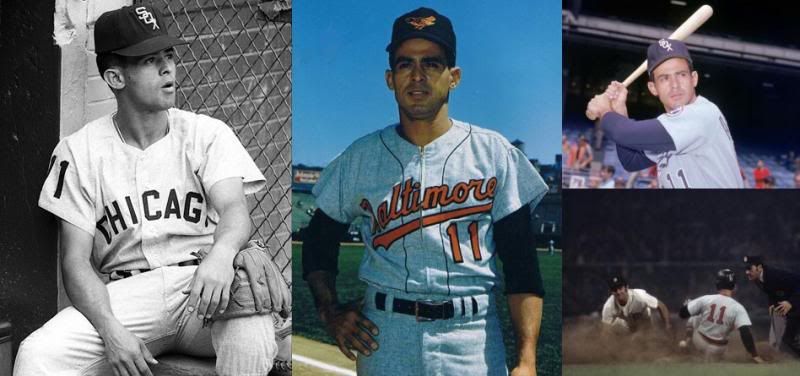
Ultimate #11: Luis Aparicio
The consistency of Luis Aparicio's career has always astounded me. In 18 seasons, he never took the field at any position besides shortstop, always played at least two-thirds of his team's games at the position, and always wore #11. With the White Sox (twice), the Orioles and the Red Sox, he's the perfect guy to represent this number.

Ultimate #12: Dusty Baker
According to Baseball-Reference, Roberto Alomar wore #12 at every stop except Arizona, where Steve Finley already had it, forcing him to wear #2. However, according to Baseball Almanac, Alomar wore both #2 and #12 for Arizona. The 2004 Diamondbacks traded away both Finley and Alomar during the season, and the Finley trade was five days before the Alomar trade. Is it possible that Alomar wore #12 in the two games he played for Arizona after the Finley trade? Without any documentation, I can't be sure. If Alomar in fact did, he would definitely be the Ultimate #12.
In the meantime, the Ultimate #12 has to be Dusty Baker, who not only wore the number at each of his four major league stops (Braves, Dodgers, Giants, Athletics), but has worn it at each managerial stop as well (Giants, Cubs, Reds). Unfortunately, I can't find pictures of Baker with a visible #12 for each of those teams, nor can I find one for any other player who potentially qualifies for the Ultimate Number Player designation, so I won't be able to include a photo collage with this one. Sorry!
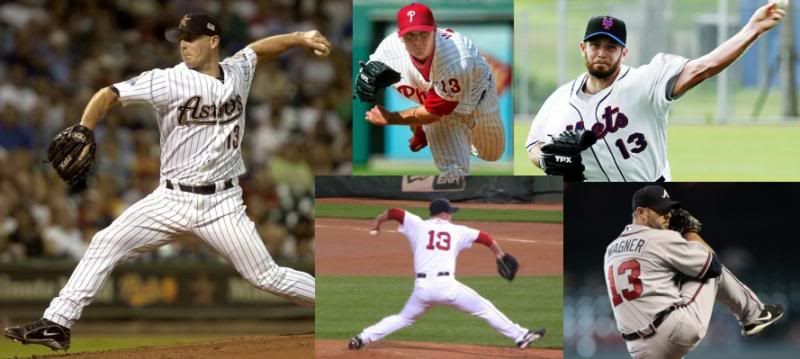
Ultimate #13: Billy Wagner
Perhaps one of the most underrated players of our era (career 187 ERA+!), Wagner wore the unlucky #13 with five teams: The Astros, Phillies, Mets, Red Sox and Braves.

Ultimate #14: Pete Rose
The rare "gritty gamer" type who was actually a Hall of Fame-level player, Rose wore #14 with his hometown Reds, the Phillies (before it was retired for Jim Bunning), the Expos in a brief stint, and the Reds again, where he broke the all-time hit record.

Ultimate #15: Davey Lopes
A legitimate Hall of Very Good second baseman, Lopes wore the number with the Dodgers, Athletics, Cubs and Astros, though there were periods with the latter two teams when he wore different numbers.
Since I can't find pictures of Lopes with a visible number 15 for each of those teams, there's going to be another substitute photo collage. The player? Kevin Millar, who also wore it with four teams: The Marlins, Red Sox, Orioles and Blue Jays. He was nowhere near the player Lopes was, but he stuck around long enough to make his mark on baseball.

Ultimate #11: Luis Aparicio
The consistency of Luis Aparicio's career has always astounded me. In 18 seasons, he never took the field at any position besides shortstop, always played at least two-thirds of his team's games at the position, and always wore #11. With the White Sox (twice), the Orioles and the Red Sox, he's the perfect guy to represent this number.
Ultimate #12: Dusty Baker
According to Baseball-Reference, Roberto Alomar wore #12 at every stop except Arizona, where Steve Finley already had it, forcing him to wear #2. However, according to Baseball Almanac, Alomar wore both #2 and #12 for Arizona. The 2004 Diamondbacks traded away both Finley and Alomar during the season, and the Finley trade was five days before the Alomar trade. Is it possible that Alomar wore #12 in the two games he played for Arizona after the Finley trade? Without any documentation, I can't be sure. If Alomar in fact did, he would definitely be the Ultimate #12.
In the meantime, the Ultimate #12 has to be Dusty Baker, who not only wore the number at each of his four major league stops (Braves, Dodgers, Giants, Athletics), but has worn it at each managerial stop as well (Giants, Cubs, Reds). Unfortunately, I can't find pictures of Baker with a visible #12 for each of those teams, nor can I find one for any other player who potentially qualifies for the Ultimate Number Player designation, so I won't be able to include a photo collage with this one. Sorry!
Ultimate #13: Billy Wagner
Perhaps one of the most underrated players of our era (career 187 ERA+!), Wagner wore the unlucky #13 with five teams: The Astros, Phillies, Mets, Red Sox and Braves.
Ultimate #14: Pete Rose
The rare "gritty gamer" type who was actually a Hall of Fame-level player, Rose wore #14 with his hometown Reds, the Phillies (before it was retired for Jim Bunning), the Expos in a brief stint, and the Reds again, where he broke the all-time hit record.

Ultimate #15: Davey Lopes
A legitimate Hall of Very Good second baseman, Lopes wore the number with the Dodgers, Athletics, Cubs and Astros, though there were periods with the latter two teams when he wore different numbers.
Since I can't find pictures of Lopes with a visible number 15 for each of those teams, there's going to be another substitute photo collage. The player? Kevin Millar, who also wore it with four teams: The Marlins, Red Sox, Orioles and Blue Jays. He was nowhere near the player Lopes was, but he stuck around long enough to make his mark on baseball.

Saturday, June 8, 2013
Ultimate Number Players: #6-10
Last time we looked at the Ultimate Player for numbers 1 through 5; this installment will include the next sequential quintet. If you need a refresher on how a player qualifies for this list, check that link.
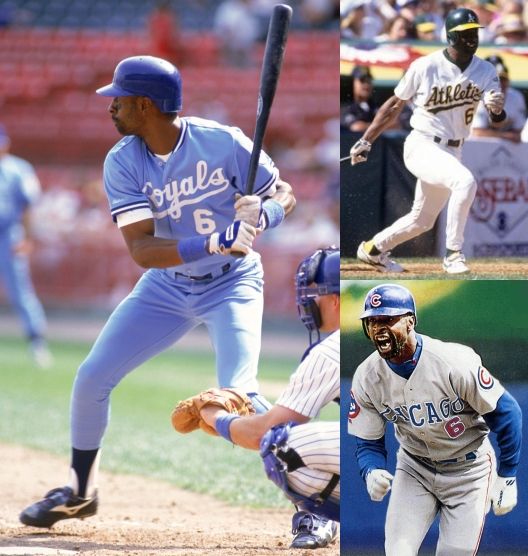
Ultimate #6: Willie Wilson
The speedster wore #6 with the Royals, Athletics and Cubs, and was easily the best of the few players who made it to three teams.

Ultimate #7: J.D. Drew
He may have been perceived as dispassionate and businesslike, but he got the number with the Cardinals, Braves, Dodgers and Red Sox.

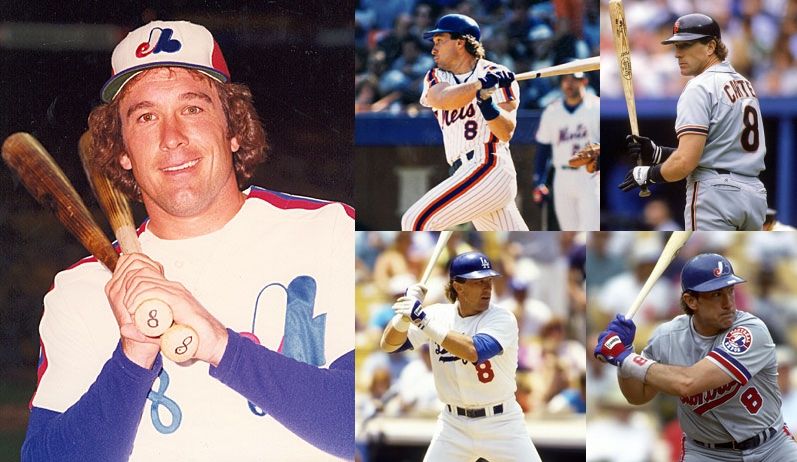
Ultimate #8: Gary Carter
It's always nice when Hall of Famers show up. Gary Carter was a no-doubter here. He was the only player to get the number with as many as four different franchises and he topped that by adding a second stint with one of those teams. In order, he had it with the Expos, Mets, Giants, Dodgers and Expos again.

Ultimate #9: Lee Stevens
This one was surprising, but the journeyman first baseman managed to get the number with the Angels, Rangers, Expos and Indians.

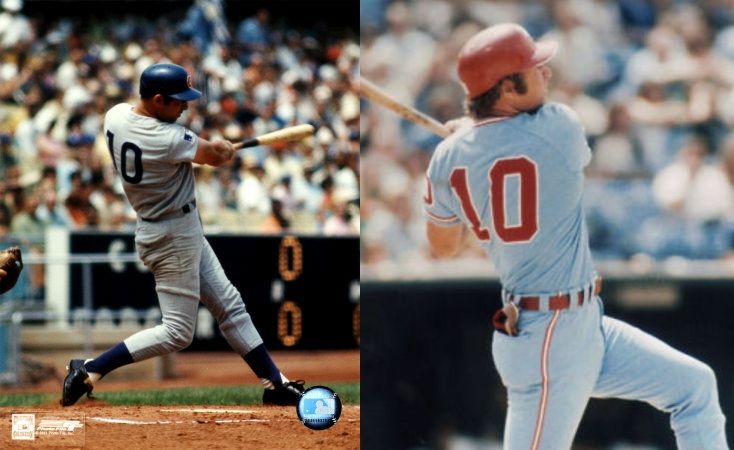
Ultimate #10: Lefty Grove
No player who played for more than two teams managed to wear #10 at every stop. One who did though, was possibly the greatest left-handed pitcher ever, and earned the "Ultimate Player" title for sporting it with the Athletics and Red Sox.
However, given that it's nearly impossible to find a single photo where Grove's #10 is visible, for the photo collage I went with another Hall of Famer who qualifies, Ron Santo, who wore it with both the Cubs and White Sox.

Next time we'll be looking at 11 through 15. Stay tuned!
Ultimate #6: Willie Wilson
The speedster wore #6 with the Royals, Athletics and Cubs, and was easily the best of the few players who made it to three teams.
Ultimate #7: J.D. Drew
He may have been perceived as dispassionate and businesslike, but he got the number with the Cardinals, Braves, Dodgers and Red Sox.

Ultimate #8: Gary Carter
It's always nice when Hall of Famers show up. Gary Carter was a no-doubter here. He was the only player to get the number with as many as four different franchises and he topped that by adding a second stint with one of those teams. In order, he had it with the Expos, Mets, Giants, Dodgers and Expos again.
Ultimate #9: Lee Stevens
This one was surprising, but the journeyman first baseman managed to get the number with the Angels, Rangers, Expos and Indians.

Ultimate #10: Lefty Grove
No player who played for more than two teams managed to wear #10 at every stop. One who did though, was possibly the greatest left-handed pitcher ever, and earned the "Ultimate Player" title for sporting it with the Athletics and Red Sox.
However, given that it's nearly impossible to find a single photo where Grove's #10 is visible, for the photo collage I went with another Hall of Famer who qualifies, Ron Santo, who wore it with both the Cubs and White Sox.
Next time we'll be looking at 11 through 15. Stay tuned!
Sunday, May 26, 2013
Ultimate Number Players: #1-5
If you read this blog regularly, you might get the sense that I love lists and trivia to the point of obsessiveness. And you'd probably be right. What better to do with this post than share another one of my obsessions?
I have an interest in uniform numbers, and I love it when a player manages to wear the same number his entire career. Of course, it's not all that impressive if he spends his entire career with one team, but when he goes through several teams and maintains the same number, that's when it becomes downright cool.
Thanks to Baseball-Reference's Uniform Number Search, we can easily find out which players wore the same number with multiple teams. However, a more interesting question (to me, at least) is which players managed to wear the same number at every stop in their careers?
I thought it'd be good to celebrate these players, and also to pick the "Ultimate Player" for each number. To be the "Ultimate Player," he must meet the following criteria:
1) The player must have worn the same number at some point for each team he played for.
2) If he had multiple stints with a team, he must have worn the number during both stints. A "stint" refers to a continuous duration of time in the organization.
3) If he left the organization at some point and returned wearing a different number, he doesn't count. (Joey Hamilton is an example of a player who was disqualified under this rule. Hamilton wore #50 with each of the three teams he played for during his career. After spending the 2002 season with the Reds, he signed as a free agent with the Cardinals and didn't make it out of Spring Training. He then went back to the Reds, but wore #54 in this second stint. As much as I wish I could include him, it doesn't seem right to me.)
4) He must have worn the number for the most teams (or stints) of any player who meets the above criteria.
5) He must no longer be active, since an active player still has the chance to lose the number with a new team.
6) In case of a tie, I'll pick the player I think was better (which usually isn't too tough a choice).
For these "Ultimate Players," I want to include a collage of their number being worn for each team. However, there's a bit of a problem there. There are a few cases where I can't find a good photo of their number being displayed while a member of that team. In those cases, my only option is to give you a collage of the best player of whom I can find good photos.
For this installment, let's look at numbers 1-5!
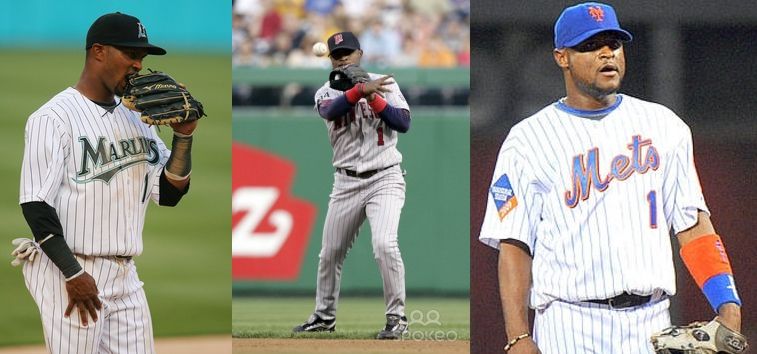
Ultimate #1: Richie Ashburn
Not a tough choice here, as the Hall of Fame center fielder wore it with three teams: the Phillies, Cubs and Mets. However, since Ashburn played in an era when most teams didn't have numbers on the front, it's hard to find photos where his number #1 is visible.
Therefore, for the photo collage, I give you another player who managed to wear #1 for three teams: Luis Castillo. He's nothing close to a Hall of Famer, but he was a fine player for several years.

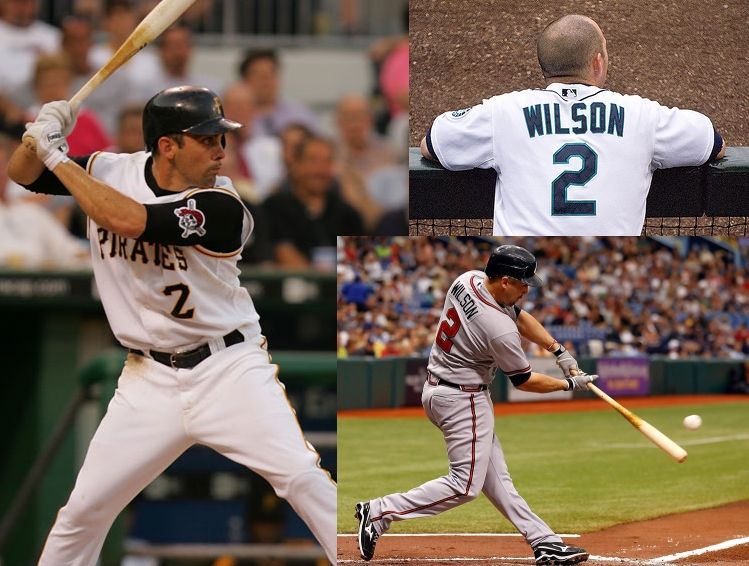
Ultimate #2: Jack Wilson
Wilson and Fred Patek are the only qualifying players I can find who made it to three teams, and it was essentially a tossup between them. I went with Wilson, since I could find good photos for him. The underrated shortstop wore it with the Pirates, Mariners and Braves during his career.
Kelly Johnson is currently at four teams, but since he's active, we can't include him yet.

Ultimate #3: Dale Murphy
Another easy choice. The Braves retired Murphy's #3, and he also wore it with the Phillies and Rockies.

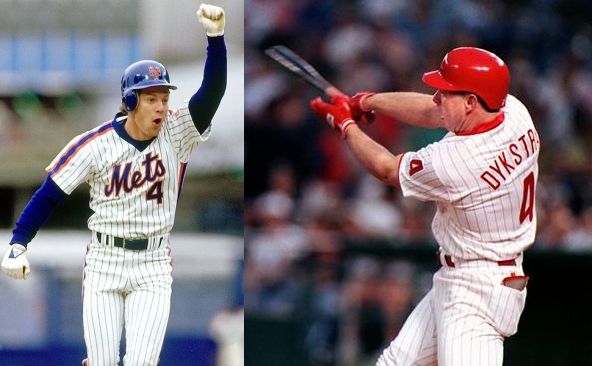
Ultimate #4: Lenny Dykstra
#4 doesn't have many good choices, since it's often worn by great players, and it's notoriously hard to keep throughout one's career. Therefore, the best I can give you is Lenny Dykstra of the Mets and Phillies.
Hall of Famer Joe Cronin sort of qualifies, but because he played for the Pirates during the pre-uniform number era, it didn't seem quite right. Journeyman infielder Pete Orr is currently sitting on three teams, and if he never plays another game in the majors, he'll become the Ultimate #4. What a strange circumstance that'd be. I'm sure that Bobby Orr, whom he wears the number in tribute to, would be proud.

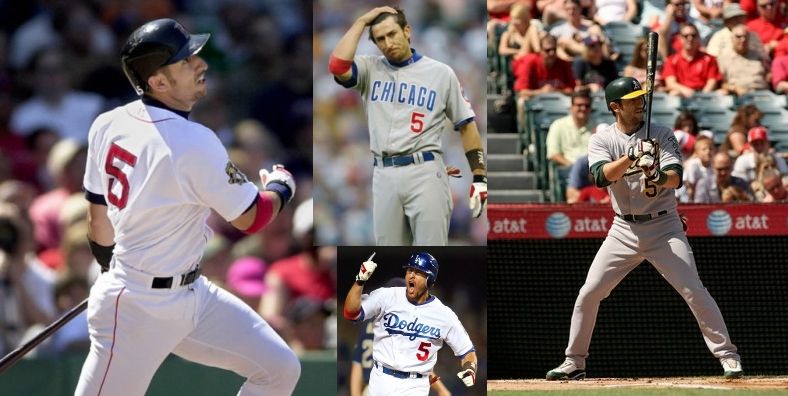
Ultimate #5: Nomar Garciaparra
A guy who had six Hall of Fame-level seasons and little else, Garciaparra wore the number with the Red Sox, Cubs, Dodgers and Athletics.

I have an interest in uniform numbers, and I love it when a player manages to wear the same number his entire career. Of course, it's not all that impressive if he spends his entire career with one team, but when he goes through several teams and maintains the same number, that's when it becomes downright cool.
Thanks to Baseball-Reference's Uniform Number Search, we can easily find out which players wore the same number with multiple teams. However, a more interesting question (to me, at least) is which players managed to wear the same number at every stop in their careers?
I thought it'd be good to celebrate these players, and also to pick the "Ultimate Player" for each number. To be the "Ultimate Player," he must meet the following criteria:
1) The player must have worn the same number at some point for each team he played for.
2) If he had multiple stints with a team, he must have worn the number during both stints. A "stint" refers to a continuous duration of time in the organization.
3) If he left the organization at some point and returned wearing a different number, he doesn't count. (Joey Hamilton is an example of a player who was disqualified under this rule. Hamilton wore #50 with each of the three teams he played for during his career. After spending the 2002 season with the Reds, he signed as a free agent with the Cardinals and didn't make it out of Spring Training. He then went back to the Reds, but wore #54 in this second stint. As much as I wish I could include him, it doesn't seem right to me.)
4) He must have worn the number for the most teams (or stints) of any player who meets the above criteria.
5) He must no longer be active, since an active player still has the chance to lose the number with a new team.
6) In case of a tie, I'll pick the player I think was better (which usually isn't too tough a choice).
For these "Ultimate Players," I want to include a collage of their number being worn for each team. However, there's a bit of a problem there. There are a few cases where I can't find a good photo of their number being displayed while a member of that team. In those cases, my only option is to give you a collage of the best player of whom I can find good photos.
For this installment, let's look at numbers 1-5!
Ultimate #1: Richie Ashburn
Not a tough choice here, as the Hall of Fame center fielder wore it with three teams: the Phillies, Cubs and Mets. However, since Ashburn played in an era when most teams didn't have numbers on the front, it's hard to find photos where his number #1 is visible.
Therefore, for the photo collage, I give you another player who managed to wear #1 for three teams: Luis Castillo. He's nothing close to a Hall of Famer, but he was a fine player for several years.
Ultimate #2: Jack Wilson
Wilson and Fred Patek are the only qualifying players I can find who made it to three teams, and it was essentially a tossup between them. I went with Wilson, since I could find good photos for him. The underrated shortstop wore it with the Pirates, Mariners and Braves during his career.
Kelly Johnson is currently at four teams, but since he's active, we can't include him yet.
Ultimate #3: Dale Murphy
Another easy choice. The Braves retired Murphy's #3, and he also wore it with the Phillies and Rockies.

Ultimate #4: Lenny Dykstra
#4 doesn't have many good choices, since it's often worn by great players, and it's notoriously hard to keep throughout one's career. Therefore, the best I can give you is Lenny Dykstra of the Mets and Phillies.
Hall of Famer Joe Cronin sort of qualifies, but because he played for the Pirates during the pre-uniform number era, it didn't seem quite right. Journeyman infielder Pete Orr is currently sitting on three teams, and if he never plays another game in the majors, he'll become the Ultimate #4. What a strange circumstance that'd be. I'm sure that Bobby Orr, whom he wears the number in tribute to, would be proud.
Ultimate #5: Nomar Garciaparra
A guy who had six Hall of Fame-level seasons and little else, Garciaparra wore the number with the Red Sox, Cubs, Dodgers and Athletics.
Subscribe to:
Posts (Atom)